ENG
ENG
 English
 русский
 中文简体
中文简体 Español
 Indonesia
Why Extrusion Geometry Is the First Decision in Thermal Design
Every industrial cooling problem begins with the same question: how much surface area can a given cross-section expose to moving air without adding unnecessary mass or cost. Aluminum extrusion profiles solve this through geometry rather than exotic materials, since aluminum alloys used in thermal management extrusions already offer a favorable balance of conductivity, weight, and machinability. The real engineering variable is fin shape, spacing, and depth, which is why profile families such as the serrated fin design and the radial sunflower layout exist side by side rather than one replacing the other.
This article breaks down four extrusion profiles commonly specified in LED drivers, motor controllers, power supplies, and modular equipment frames, then provides a practical comparison so engineers and procurement teams can match a profile to a duty cycle rather than a datasheet alone.
How Heat Actually Leaves an Aluminum Profile
Before comparing profiles, it helps to see the pathway heat follows once it enters the extrusion. The base conducts heat away from the component, the fin array multiplies the contact area with air, and airflow (natural or forced) carries the heat away from the fin surfaces. A profile that ignores any one of these three stages underperforms regardless of how much metal it uses.
Serrated Radiator Profiles: Maximizing Surface Area per Millimeter
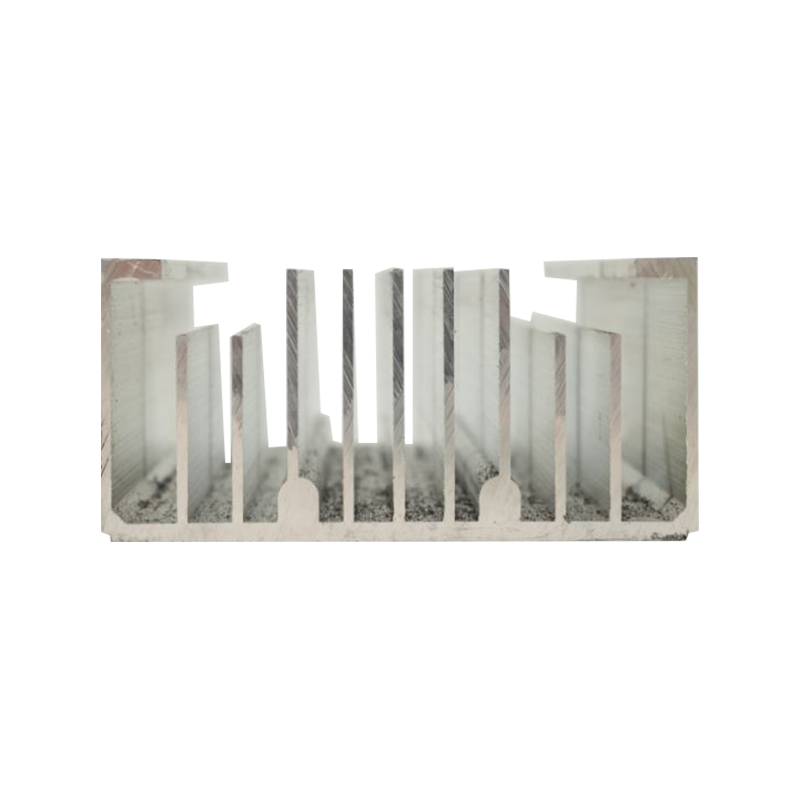
The serrated radiator profile cuts the fin field into narrow, tooth-like segments rather than leaving continuous straight fins. This interrupts the boundary layer of air that forms along a flat fin surface, which otherwise slows heat exchange as air travels further along the fin length. In natural convection applications, breaking that boundary layer repeatedly across a serrated surface can increase effective heat dissipation by a meaningful margin compared to a smooth-fin extrusion of the same overall footprint.
Where Serration Helps Most
- Enclosed equipment cabinets with limited or no forced airflow
- LED driver housings where a compact footprint is required
- Applications with continuous, steady thermal load rather than sharp spikes
Because the serration reduces fin depth slightly compared to a straight fin of equal thickness, this profile trades a small amount of raw fin length for a large gain in exposed edge surface, which is the more relevant metric under natural convection.
Sunflower Radiator Profiles: Radial Fin Distribution for 360-Degree Cooling
The sunflower radiator profile arranges fins radially around a central core, resembling spokes rather than parallel plates. This layout distributes heat evenly in every direction instead of concentrating dissipation along a single plane, which matters for components mounted with airflow arriving from an unpredictable angle, such as ceiling-mounted or free-standing LED fixtures.
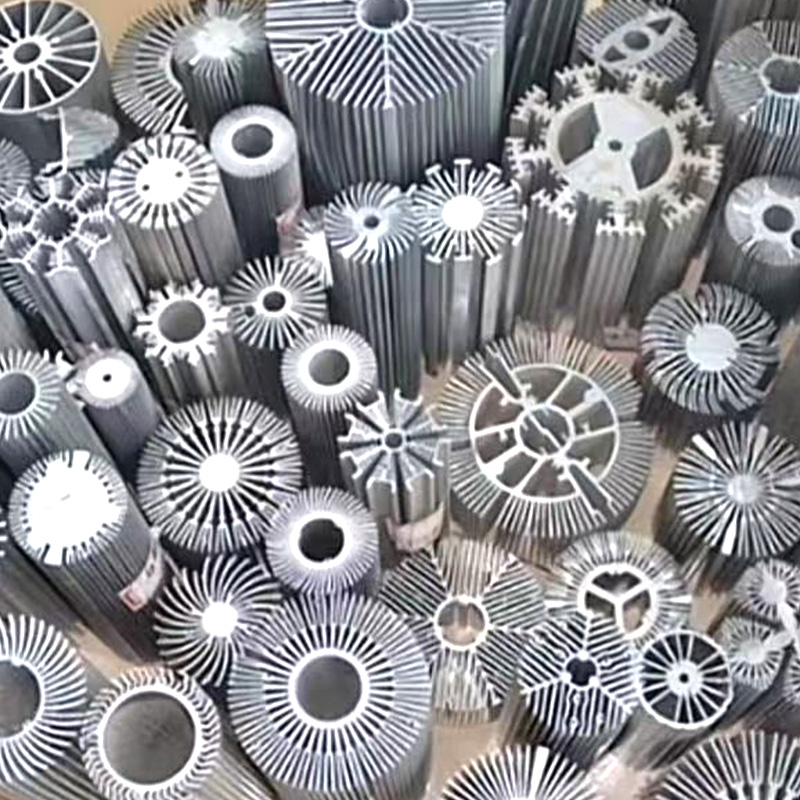
A radial fin layout performs consistently regardless of mounting orientation, which reduces the need to specify airflow direction during installation planning.
Radial designs also tend to shed heat more evenly across the fixture body, which lowers hot-spot risk on the outer housing, a common concern in high-power LED and industrial lighting enclosures.
4040 Flow Aluminum Wire Profile: Structural Framing with Cable Routing Built In
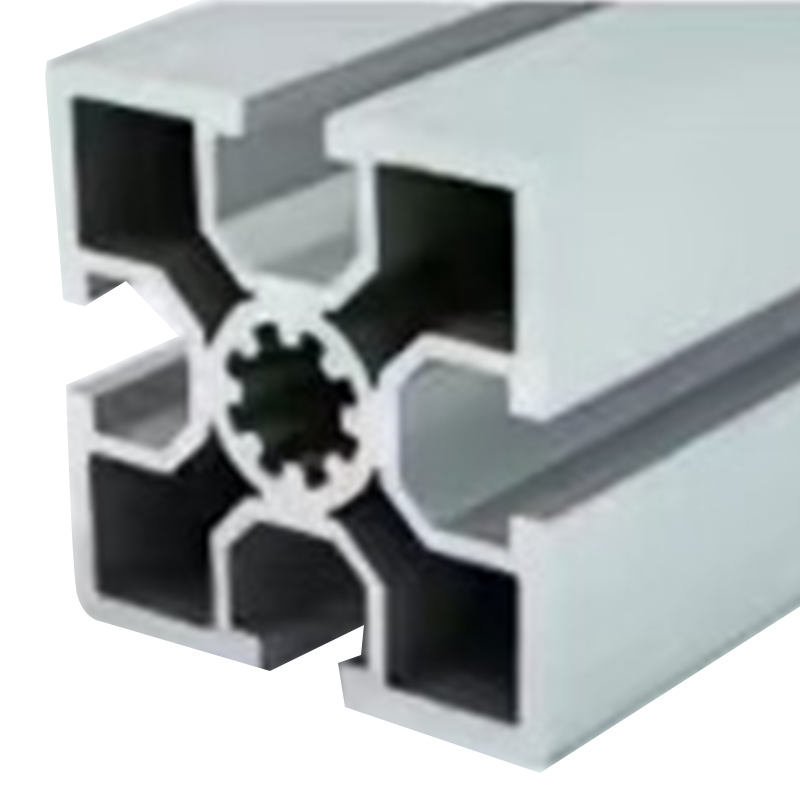
Not every extrusion in a thermal or industrial system is meant to dissipate heat directly. The 4040 flow aluminum wire profile is a modular t-slot section, 40mm by 40mm in cross-section, designed to build structural frames for workstations, conveyor supports, and equipment enclosures while providing internal channels for routing wiring or tubing out of sight.
Typical Roles in a Cooling System Assembly
- Forming the outer frame that supports heat sink panels or fan trays
- Routing power and sensor cables away from hot surfaces
- Allowing tool-free reconfiguration as equipment layouts change
4080 Wide Rectangular Tube: Load-Bearing Support for Larger Assemblies
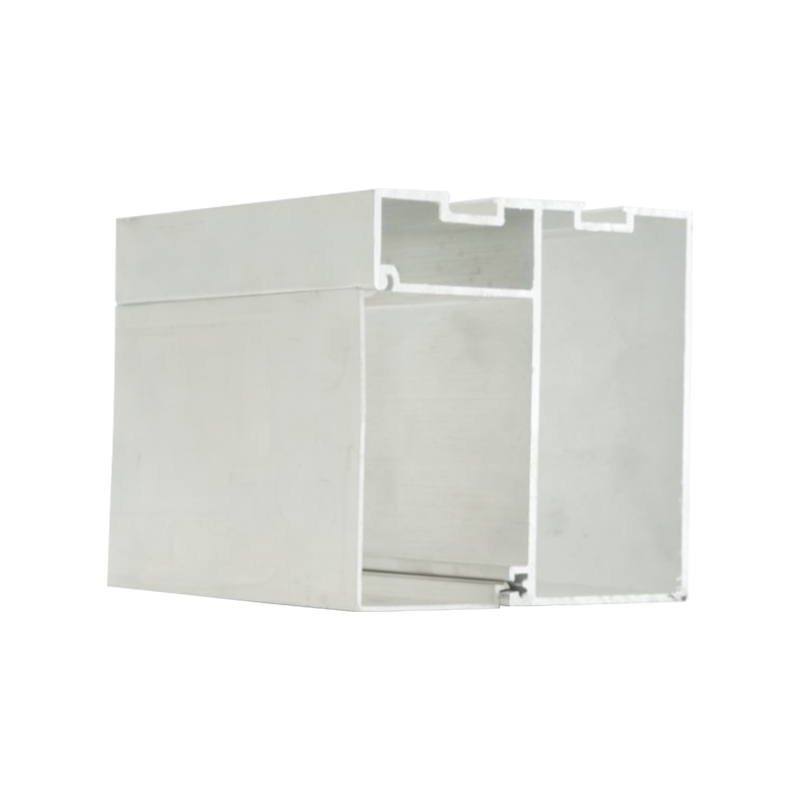
When a frame needs to span longer distances or carry heavier heat sink panels, the 4080 wide rectangular tube extends the same t-slot logic into a wider 40mm by 80mm section. The added width increases the section's resistance to bending under load, which matters when a frame supports large radiator panels, industrial enclosures, or multi-shelf equipment racks.
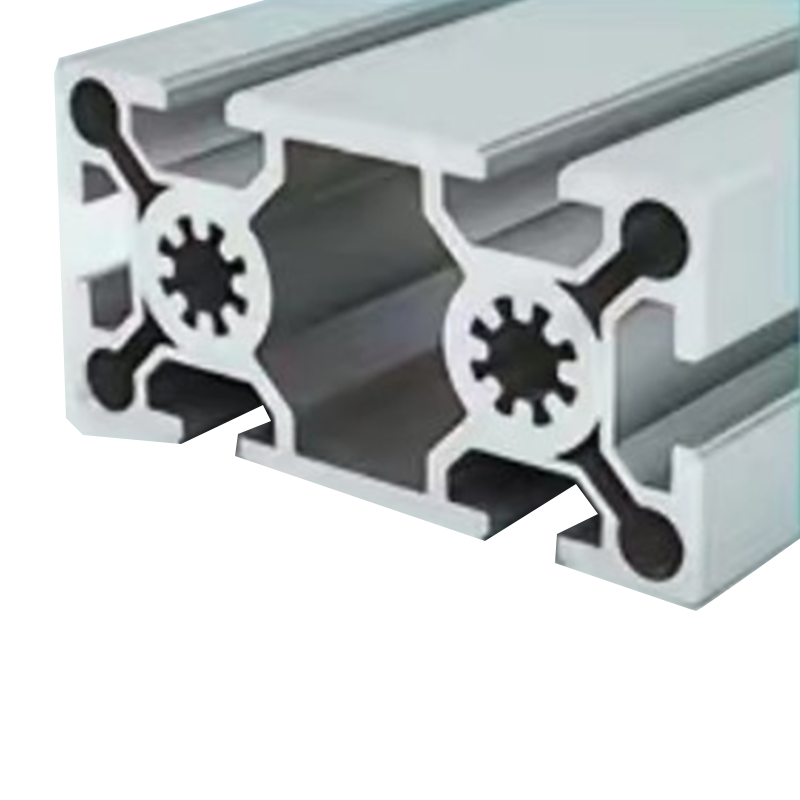
Pairing 4040 sections for lighter internal framing with 4080 sections for primary load-bearing spans is a common way to balance material cost against structural rigidity in a single assembly.
Comparing Cross-Section Behavior at a Glance
Profile Selection Reference Table
| Profile | Primary Function | Fin or Slot Pattern | Best Suited For |
|---|---|---|---|
| Serrated radiator | Thermal dissipation | Segmented tooth fins | Compact natural-convection enclosures |
| Sunflower radiator | Thermal dissipation | Radial spoke fins | Omnidirectional lighting fixtures |
| 4040 flow wire profile | Structural framing | 40x40 t-slot with wire channel | Light frames and cable management |
| 4080 wide tube | Structural framing | 40x80 t-slot with wire channel | Long-span, load-bearing assemblies |
Matching a Profile to the Application
The decision usually comes down to two questions: is the goal heat dissipation or structural support, and if it is thermal, will airflow arrive from a fixed direction or from multiple angles. A serrated profile suits a fixed-orientation enclosure with limited airflow, while a sunflower profile suits a suspended or free-standing fixture exposed to air on all sides. Once the thermal profile is chosen, framing needs are addressed separately with 4040 sections for lighter internal structure and 4080 sections wherever the assembly needs to resist bending across a longer span.
Quick Decision Checklist
- Fixed mounting orientation and enclosed housing: consider serrated fin geometry
- Open mounting with airflow from multiple sides: consider radial sunflower geometry
- Light internal frame or cable routing: 40x40 profile
- Long spans or heavier panel loads: 40x80 profile
Frequently Asked Questions
Q1: Does a serrated fin surface reduce the structural strength of the extrusion?
The serration is limited to the fin tips and does not significantly affect the base thickness, so overall structural integrity for mounting purposes remains largely unchanged.
Q2: Can a sunflower radiator be mounted horizontally as well as vertically?
Yes, the radial fin arrangement is designed specifically to perform consistently regardless of mounting orientation, unlike parallel-fin designs that favor one direction.
Q3: What distinguishes the 4040 profile from the 4080 profile besides width?
Beyond the wider cross-section, the 4080 profile offers greater resistance to bending under load, making it better suited to longer unsupported spans within a frame.
Q4: Can wiring be routed internally through both the 4040 and 4080 profiles?
Both profiles include internal channels intended for routing cables or tubing, keeping wiring protected and out of view within the frame structure.
Q5: Is anodizing typically applied to these extrusion profiles?
Anodizing is a common finishing step for both structural and radiator profiles, improving surface durability and corrosion resistance without affecting thermal or structural performance.