ENG
 English
 русский
 中文简体
 Español
 Indonesia

An operations manager in Suzhou replaced a five-year-old steel telescopic gate after repeated roller failures and visible rust on almost every panel. The new aluminum frame gate has run for three years with nothing more than routine cleaning and a light coating of lubricant on the rollers. The difference was not luck. It was the material. Aluminum telescopic door frames have a straightforward set of engineering advantages that become obvious in daily operation.
LightweightCorrosion-resistantLow-maintenance
What Aluminum Telescopic Door Frames Are
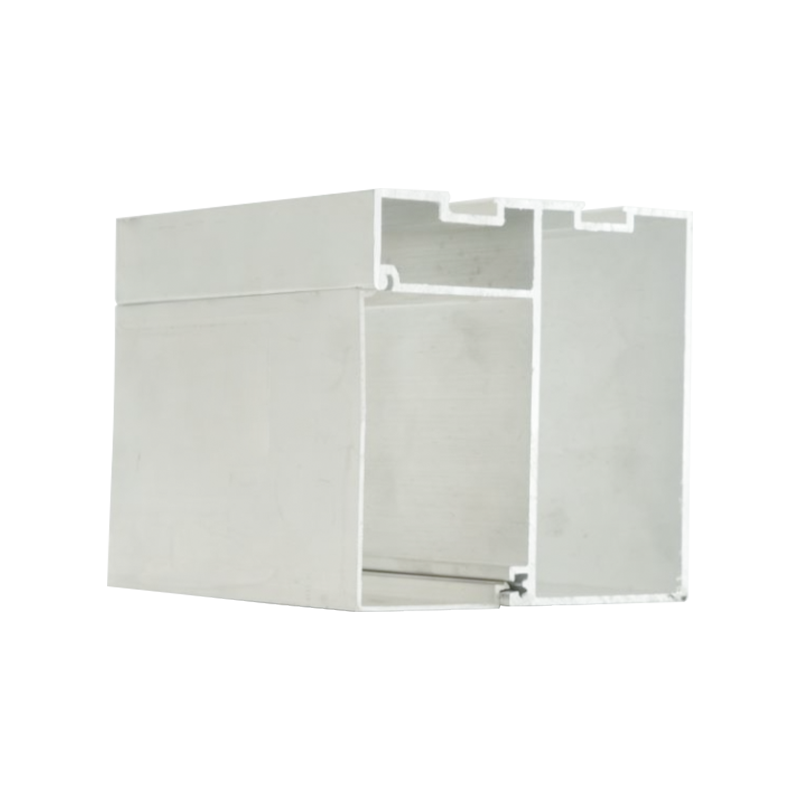
A telescopic door frame is not a single piece of metal. It is a structural system of extruded aluminum profiles that form the main beams, vertical stiles, horizontal cross members, hinge reinforcements, and guide rails of a multi-panel folding gate. The frame carries the gate weight, transfers the drive force from the motor, and keeps every panel aligned while the gate opens and closes.
The most common alloy for these frames is 6063-T5 aluminum, which combines good strength, excellent formability, and a clean surface for anodizing or powder coating. Because each profile is formed through a die with a fixed cross-section, dimensional consistency is high along the entire length. A complete profile set typically includes track sections, panel frames, hinge posts, and end closures, all designed to work as one matched system.
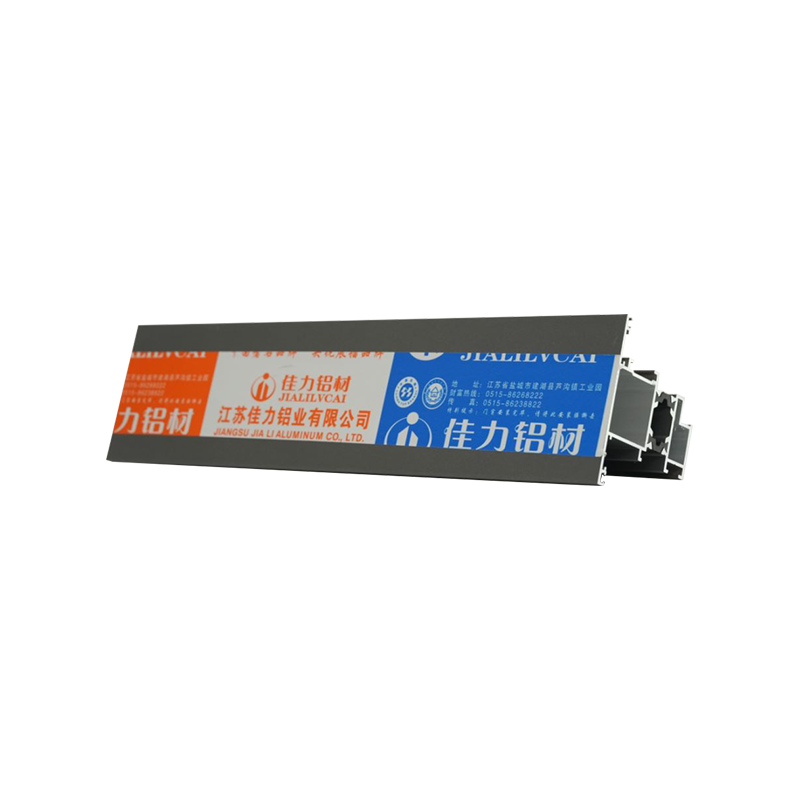
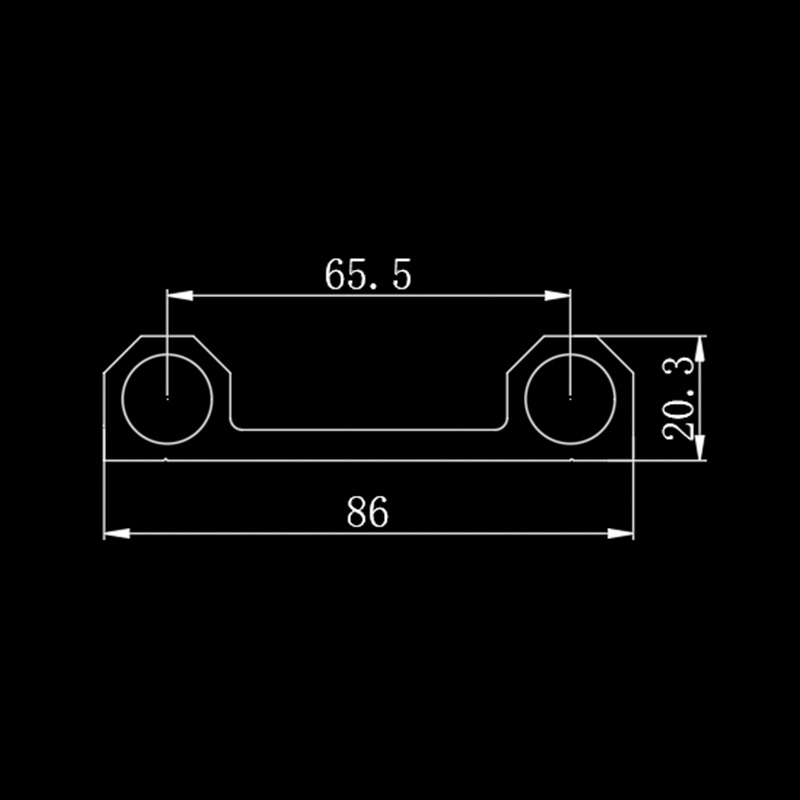 Telescopic Door Aluminum Profile with Anodized or Powder Coating FinishesThis aviation-grade aluminum profile offers precise extrusion, corrosion resistance, and structural rigidity for automated telescopic gates. Its matched profile set ensures dimensional consistency and finishing flexibility, directly supporting reliable, low-maintenance operation.View Product →
Why Aluminum Frames Outperform Steel in Daily Use
The advantages of aluminum telescopic door frames can be grouped into four areas: mass, corrosion behavior, dimensional stability, and finishing flexibility. Each one directly affects the gate's operating cost and reliability.
Weight: About One-Third the Mass of Steel
Aluminum has a density of roughly 2.7 g/cm3, while steel is about 7.85 g/cm3. A complete telescopic gate frame made from aluminum weighs around 60 to 65 percent less than a steel equivalent. The consequences are practical, not theoretical. A lighter frame lowers the inertia that the motor must overcome on every start and stop, which reduces motor strain and energy draw. It also reduces the load on rollers and track sections, the two components that wear out fastest in telescopic gates. During installation, panels that are significantly lighter are easier to lift, align, and adjust on site.
Practical reference: for a standard vehicle-access gate, switching from a steel frame to an aluminum frame can reduce overall gate weight by several hundred kilograms, depending on opening width and panel count.
Corrosion Resistance: Less Maintenance, Longer Service Intervals
Steel frames depend on paint or galvanized coating for protection. Every scratch, cut edge, or weld seam is a potential rust point, and rust migrates under the coating over time. Aluminum forms a dense, naturally self-healing oxide layer on its surface. When the profile is anodized or powder-coated, that protection is reinforced even further.
For an outdoor telescopic gate, the maintenance comparison is decisive. Steel gates usually need rust treatment and repainting within the first few years; aluminum gates can operate for a decade with only cleaning and hardware checks.
Dimensional Accuracy: Smooth, Stable Folding Motion
Telescopic gates rely on straight rails and consistent panel spacing. Welded steel sections can distort from welding heat, and any bow in the frame translates into scraping panels or jammed tracks. Aluminum extrusions are produced through a die, so straightness and cross-section are controlled continuously. The result is that panels collapse and extend evenly, the gate holds its alignment under side loads, and installation time is shorter because less shimming and correction are required.
Flexible Surface Finishes for Architectural Integration
Aluminum profiles accept a broader range of architectural finishes than steel at comparable cost. Anodized silver, dark bronze, champagne gold, and powder-coated RAL colors can all be applied to the same extrusion. For gates that are visible from the street or part of a building facade, the frame can match the surrounding architecture without extra fabrication steps.
Aluminum vs Steel vs Stainless: Side-by-Side Comparison
The choice is not always between aluminum and painted steel; some buyers ask about stainless steel. The table below compares the three materials for telescopic door frames.
| Comparison Item | Aluminum Alloy | Structural Steel | Stainless Steel |
|---|---|---|---|
| Density (g/cm3) | 2.7 | 7.85 | 7.9 |
| Relative Frame Weight | Light | Heavy | Heavy |
| Corrosion Resistance | High | Requires Coating | High |
| Surface Coating | Anodizing, Powder Coating | Paint, Galvanizing | Brush or Matte Finish |
| Typical Maintenance Load | Low | High | Moderate |
| Machining Complexity | Low | High After Welding | Moderate to High |
| Relative Material Cost | Moderate | Lowest | Highest |
Engineering Considerations for Telescopic Door Frames
Selecting the right frame means deciding alloy, wall thickness, surface treatment, and profile geometry. Each choice affects the gate's structural performance and service life.
Alloy and Temper
6063-T5 is the standard choice for gate profiles because it extrudes cleanly and finishes well. For wide spans, heavy infill panels, or high-wind sites, 6061-T6 offers higher yield strength. A reliable supplier will state the alloy and temper explicitly, because they determine acceptable load capacity and deflection limits.
Wall Thickness at Load-Bearing Sections
The main horizontal beams and hinge posts carry the highest bending loads. A typical specification for load-bearing telescopic door profiles is about 1.5 to 2.5 mm minimum wall thickness at critical sections, while infill and trim sections can be thinner. The actual minimum wall thickness should be checked on the drawing, since some low-cost profiles reduce thickness in hidden areas while keeping the outer dimensions identical.
Surface Treatment for Outdoor Exposure
Anodized film is the most common protective finish for exterior gate profiles. For outdoor architectural aluminum, the anodic film should generally be at least 10 to 15 microns. Powder coating provides more color choices and a tougher surface, provided the pretreatment is correct. Coastal installations benefit from thicker anodic film or a multi-layer powder coating system.
Panel Count and Folding Geometry
Multi-panel telescopic layouts create a wider opening for the same gate house footprint, and each additional panel divides the drive load among more hinges and rollers. This reduces per-panel stress and allows smoother motion. Profile design also determines the collapsed stack ratio and required track length.
A detailed multi-panel telescopic door extrusion analysis shows how intelligent profile design delivers a meaningful gain in drive efficiency or folding ratio, which is a strong reason to consider custom-extruded sections rather than generic stock profiles.
Lifecycle Costs: What You Really Pay Over a Decade
The business case for aluminum frames becomes clear when the analysis covers the full service life, not just the first invoice.
- Initial cost: an aluminum frame is typically more expensive than a painted steel frame of the same size.
- Maintenance cost: steel requires periodic rust treatment, repainting, and more frequent roller replacement; aluminum requires cleaning and occasional hardware lubrication.
- Energy cost: a lighter frame allows a smaller motor or reduces operating load, lowering electricity consumption.
- Downtime cost: fewer breakdowns mean the gate remains available for vehicles and personnel.
- Replacement cost: a properly finished aluminum frame commonly lasts 15 to 20 years, which pushes the replacement cycle far beyond that of a corroded steel frame.
In many outdoor installations, the maintenance savings alone repay the higher initial price within three to five years. The longer service life then becomes a bonus, not a compromise.
Match the Frame System to Your Site
Telescopic gates are installed in dry courtyards, industrial yards, coastal areas, and everything in between. Site conditions should drive the specification.
- Opening width: wider openings need stronger main beams and deeper guide channels to limit deflection under wind and gate self-weight.
- Motor and drive type: the track and frame must be compatible with the chosen motor torque and wheel layout.
- Environmental exposure: coastal and industrial sites call for thicker anodic film or high-performance powder coating, plus stainless fasteners.
- Traffic frequency: gates that cycle dozens of times per day need reinforced hinge pockets and durable roller tracks.
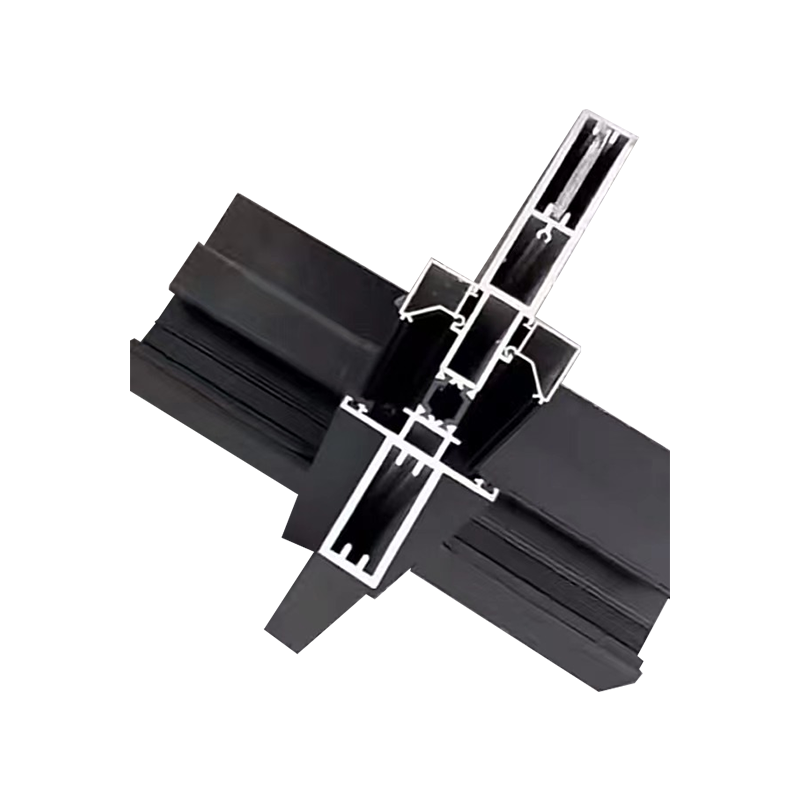
For sliding configurations, the frame must also hold the lateral guide forces generated by wind. Check that the sliding-door profile system includes an anti-lift track and closed-end stops for safety at the end of travel.
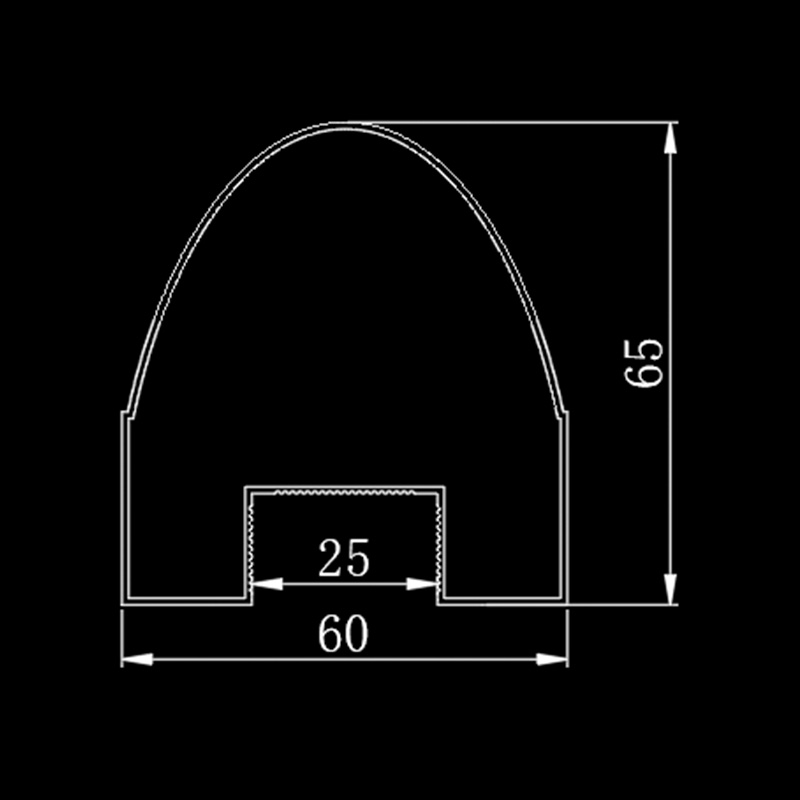 Sliding Door Aluminum Profile for Quiet, Smooth OperationPrecision-extruded from high-strength aviation aluminum, this profile supports anti-lift track integration and customized dimensions. Its smooth edges and compatible surface treatments aid in achieving stable installation and reduced friction in sliding door systems.View Product →
Frequently Asked Questions
Q1: Is aluminum strong enough for a telescopic gate frame?
Yes. Standard 6063-T5 telescopic door profiles are widely used for factory, warehouse, and residential perimeter gates. For very wide spans or heavy infill, 6061-T6 or reinforced multi-chamber profiles provide the additional strength needed.
Q2: How long do aluminum telescopic door frames last?
With a correctly applied anodized or powder-coated finish and basic maintenance, an aluminum gate frame commonly lasts 15 to 20 years outdoors. The hardware, rollers, and motor usually need replacement before the frame itself.
Q3: What is the difference between 6063-T5 and 6061-T6 for door frames?
6063-T5 extrudes more easily and gives a smoother, more uniform surface that is ideal for architectural finishes. 6061-T6 has higher yield strength but is more difficult to extrude and finish. Choose 6061-T6 when the structural load calculation demands it.
Q4: Can I order custom telescopic door profiles?
Yes. Custom profile sections are produced by designing a new extrusion die to match the required cross-section. A manufacturer with in-house extrusion capability can usually develop the die, produce samples, and adjust the section geometry to meet specific load and assembly requirements.
Aluminum Is the Practical Choice for Modern Telescopic Gates
The advantages of aluminum telescopic door frames go beyond material preference. Lower weight reduces motor strain and wear. Corrosion resistance reduces maintenance. Precise extrusion tolerances keep panels aligned. Surface finishes allow the gate to match its surroundings.
When comparing frame options, evaluate the total lifecycle cost, alloy and temper, wall thickness, and the supplier's production capability rather than price per kilogram alone. A carefully specified aluminum frame pays back its slightly higher initial cost in every opening cycle, for years.