ENG
ENG
 English
 русский
 中文简体
中文简体 Español
 Indonesia
The Core Difference: Pipe vs. Tube at a Glance
The fundamental difference between aluminum pipe and aluminum tube comes down to how they are measured and what they are designed for. Aluminum pipe is sized by its nominal bore (inner diameter) and is primarily intended for fluid or gas conveyance under pressure. Aluminum tube, including the widely used aluminum round tube, is sized by its actual outer diameter (OD) and is primarily used for structural, mechanical, and decorative purposes.
In short: pipe carries flow; tube carries load or provides structure. Understanding this distinction prevents costly specification errors in engineering, fabrication, and construction projects.
How Each Is Measured and Specified
Aluminum Pipe Measurement
Aluminum pipe uses Nominal Pipe Size (NPS), a standardized system where the stated size does not directly equal any actual dimension. For example, a 2-inch nominal pipe has an actual OD of 2.375 inches. Wall thickness is defined by a "schedule" number (e.g., Schedule 40, Schedule 80). A higher schedule means thicker walls and higher pressure ratings.
Aluminum Tube Measurement
Aluminum tube is specified by its actual outer diameter (OD) and wall thickness in real units (inches or millimeters). A tube labeled "2-inch OD × 0.125-inch wall" means exactly that — no conversion table needed. This precision is critical in structural, aerospace, and mechanical applications where exact fitment matters.
| Feature | Aluminum Pipe | Aluminum Tube |
|---|---|---|
| Sizing Standard | Nominal (NPS) — not actual | Actual OD × wall thickness |
| Primary Measurement | Inner diameter (approx.) | Outer diameter (exact) |
| Wall Thickness | Defined by Schedule (40, 80, etc.) | Defined in exact inches or mm |
| Tolerances | Looser (flow-focused) | Tighter (structural-focused) |
Intended Applications and Use Cases
Where Aluminum Pipe Is Used
Aluminum pipe is engineered for systems that transport fluids or gases. Its design prioritizes pressure containment and flow capacity over precise exterior dimensions. Common applications include:
- Natural gas and compressed air distribution lines
- Irrigation and water supply systems
- Chemical processing pipelines (leveraging aluminum's corrosion resistance)
- HVAC refrigerant lines
- Marine fuel systems
Where Aluminum Tube Is Used
Aluminum tube — especially the aluminum round tube — is chosen when dimensional accuracy, structural integrity, and surface appearance matter. Its applications span a wide range of industries:
- Aerospace frames, seat tracks, and brackets
- Bicycle frames and sports equipment
- Architectural railings, curtain walls, and canopies
- Automotive roll cages and chassis components
- Furniture, display stands, and decorative frameworks
- Pneumatic cylinders and instrumentation housing
Shapes and Cross-Section Variety
Aluminum pipe is almost exclusively produced in a round cross-section, because circular geometry is the most efficient shape for pressure containment.
Aluminum tube, by contrast, is available in numerous cross-sections to suit structural and aesthetic needs:
- Round tube — the most common, used across construction, aerospace, and furniture
- Square tube — preferred for frames, enclosures, and support columns
- Rectangular tube — used in beams, railings, and structural headers
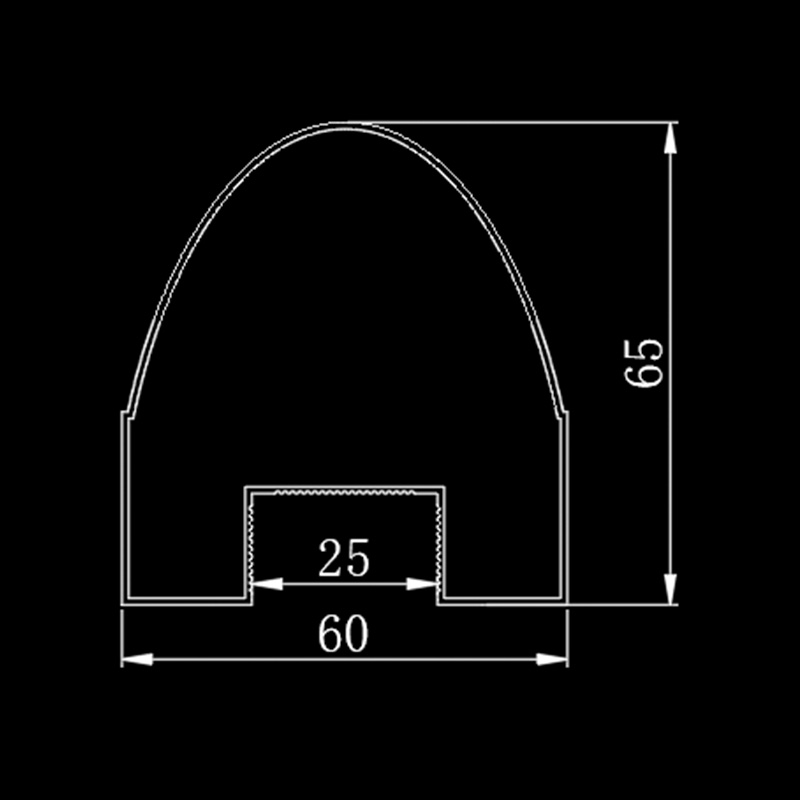
- Oval tube — chosen for aerodynamic or decorative applications
Manufacturing Process and Tolerances
The production methods differ significantly and directly affect the dimensional accuracy and mechanical properties of the finished product.
Aluminum Pipe Production
Aluminum pipes are typically produced through extrusion or seamless drawing. The priority in pipe manufacturing is wall uniformity for pressure rating. Industry standards such as ASTM B241 govern seamless aluminum pipe dimensions and tolerances, which are more permissive compared to tube standards.
Aluminum Tube Production
Aluminum tubes are manufactured via extrusion, drawing, or cold finishing. Cold-drawn tubes offer the tightest tolerances — OD tolerances can be as precise as ±0.005 inches (±0.127 mm) — making them suitable for precision mechanical assemblies. Standards such as ASTM B210 cover drawn seamless aluminum tube specifications.
Alloy Selection: Which Grades Are Commonly Used
The choice of aluminum alloy varies between pipe and tube based on the demands of their respective applications.
| Alloy | Typical Use | Key Property |
|---|---|---|
| 6061 | Structural tube, aerospace | High strength, weldable |
| 6063 | Architectural tube, extrusions | Excellent surface finish |
| 3003 | Pipe for fluid handling | Good corrosion resistance, formable |
| 5083 | Marine pipe and tube | Superior saltwater resistance |
| 2024 | Aerospace structural tube | Very high strength-to-weight ratio |
Alloy 6061-T6 is by far the most widely specified for aluminum round tube due to its balance of strength (tensile strength ~310 MPa), machinability, and weldability. For pipe used in fluid systems, 3003-H14 is a popular choice given its workability and resistance to atmospheric and chemical corrosion.
Pressure Ratings and Structural Load Capacity
Because pipe is designed for pressure containment, its schedule system directly encodes pressure-handling capability. For example, Schedule 40 aluminum pipe in 1-inch nominal size can typically handle working pressures up to approximately 600–700 psi depending on temperature and alloy.
Aluminum tube, while not typically pressure-rated in the same way, excels under structural loads — bending, compression, and torsion. A 6061-T6 aluminum round tube with a 2-inch OD and 0.125-inch wall thickness has a moment of inertia that makes it far more suitable than pipe for beam or frame applications where deflection and stiffness are the governing criteria.
Weight, Cost, and Availability Considerations
For projects where weight savings matter — such as aerospace, transportation, or portable structures — aluminum tube often provides a better weight-to-strength ratio than pipe of comparable size, because tube walls can be optimized for structural efficiency rather than pressure containment.
Cost comparison: Aluminum pipe is generally less expensive per foot than precision aluminum tube, especially for larger diameters. However, tube is typically more readily available in a wider variety of OD and wall thickness combinations, giving designers more flexibility. Aluminum round tube in common sizes (0.5-inch to 4-inch OD) is stocked at most metal distributors worldwide.
How to Choose: Pipe or Tube for Your Project
Use this simple decision guide:
- Transporting a fluid or gas under pressure? → Choose aluminum pipe. Select the appropriate schedule for your pressure requirements.
- Building a frame, railing, or structural component? → Choose aluminum tube. Specify OD and wall thickness for your load requirements.
- Need a precise fit with another component? → Choose aluminum tube. Its exact OD ensures reliable assembly with connectors, bearings, or sleeves.
- Working with a standard plumbing or piping system? → Choose pipe to match the NPS-based fittings and valves already in use.
- Decorative or visible application? → Aluminum tube, particularly round tube in 6063 alloy, offers a cleaner finish suitable for anodizing or painting.
Frequently Asked Questions
Q1: Can aluminum tube be used as a pipe for water lines?
Technically, aluminum tube can carry fluids in low-pressure, non-potable applications. However, it is not pressure-rated like pipe and does not conform to plumbing standards, so it is not recommended for pressurized water systems.
Q2: Is aluminum round tube stronger than aluminum pipe of the same size?
Not necessarily. Strength depends on alloy, wall thickness, and temper. However, tube is engineered for structural efficiency, so it often delivers better strength-to-weight performance for load-bearing applications.
Q3: Can I use standard pipe fittings on aluminum tube?
No. Pipe fittings are sized by nominal pipe size (NPS), which does not match actual tube OD dimensions. Using tube requires tube-specific fittings or custom fabrication.
Q4: What is the most common aluminum round tube alloy?
6061-T6 is the most widely used alloy for structural aluminum round tube due to its high strength, weldability, and wide availability.
Q5: What does "Schedule 40" mean for aluminum pipe?
Schedule 40 refers to a standardized wall thickness relative to the pipe's nominal diameter. It is one of the most common schedules for general-purpose aluminum piping and is suitable for moderate pressure applications.
Q6: Is aluminum pipe or tube more corrosion resistant?
Both offer excellent corrosion resistance inherent to aluminum. The alloy choice matters more than whether it is pipe or tube — for marine or chemical environments, alloys like 5083 or 3003 are preferred regardless of form.