ENG
ENG
 English
 русский
 中文简体
中文简体 Español
 Indonesia
What Are Aluminum Extrusion Profiles? A Direct Answer
Aluminum extrusion profiles are structural components created by forcing heated aluminum alloy through a shaped die to produce cross-sections with specific geometries. The most common types include T-slot profiles, sleeve-type aluminum profiles, angle profiles, channel profiles, tube profiles, and custom architectural sections. Each type is engineered for distinct load-bearing, assembly, or aesthetic applications across industries such as construction, manufacturing, furniture, and transportation.
Understanding which profile type suits your project is essential—choosing the wrong cross-section can result in structural weakness, assembly difficulties, or unnecessary material cost.
T-Slot Aluminum Profiles
T-slot profiles are among the most widely used extrusion types in modular framing and industrial assembly systems. They feature continuous T-shaped slots along one or more faces, allowing fasteners, nuts, and brackets to be inserted and repositioned at any point without drilling.
- Standard sizes range from 20×20 mm to 80×160 mm, with 40×40 mm and 45×45 mm being the most common in machine guarding and workstation frames.
- Compatible with M5, M6, M8, and M10 T-nuts depending on slot width.
- Widely applied in conveyor frames, CNC enclosures, robot cells, and display stands.
- Available in single-slot, double-slot, and multi-slot configurations for different connection requirements.
The key advantage is reconfigurability: structures built with T-slot profiles can be disassembled and rebuilt without damaging the material, making them ideal for rapidly changing production environments.
Sleeve-Type Aluminum Profiles
Sleeve-type aluminum profiles are specialized extrusions designed for assembly-line systems and modular furniture construction. Unlike T-slot profiles that rely on surface-mounted hardware, sleeve-type profiles use internal connector sleeves inserted into hollow bore channels at the ends of each section, providing hidden and highly rigid joints.
Key Structural Features
- Inner bore diameter typically ranges from 18 mm to 28 mm to accommodate standard sleeve connectors.
- Outer dimensions commonly range from 28×28 mm to 60×60 mm for light to medium-duty applications.
- Wall thickness is engineered for both axial compression resistance and lightweight handling.
- Surface options include anodized silver, black anodized, and powder-coated finishes for aesthetic and corrosion resistance.
Primary Applications
- Assembly line conveyor frames where clean appearance and structural rigidity are both required.
- Modular home and office furniture including shelving, tables, and storage units.
- Retail display fixtures demanding tool-free or minimal-tool assembly.
- Lean manufacturing workstations requiring repeated reconfiguration.
Compared to T-slot systems, sleeve-type profiles deliver a cleaner visual finish since all connection hardware is concealed inside the profile ends. This makes them a preferred choice in environments where both functionality and aesthetics matter, such as customer-facing retail or open-plan offices.
Angle and L-Shape Aluminum Profiles
Angle profiles, also called L-profiles, have an L-shaped cross-section. They are one of the simplest and most cost-effective extrusion forms, commonly used for edge protection, framing corners, and light structural reinforcement.
- Equal leg angles (e.g., 30×30 mm, 40×40 mm) and unequal leg angles (e.g., 40×25 mm) are both standard.
- Leg thickness ranges from 2 mm to 6 mm depending on load requirements.
- Used extensively in solar panel mounting systems, cabinet frames, and staircase edging.
Their simplicity means they are easy to cut, drill, and fasten with standard hardware, making them accessible for small-scale fabrication projects.
Channel and U-Shape Aluminum Profiles
Channel profiles (U-profiles) feature a three-sided open cross-section. The open face allows them to act as guides, tracks, or structural channels for enclosing wiring, edges, or sliding components.
- Internal widths typically range from 10 mm to 80 mm to accommodate various panel thicknesses or cable bundles.
- Flange heights can be equal or asymmetric based on design needs.
- Common uses: door and window frame channels, LED strip housings, curtain tracks, and structural glazing systems.
In architectural applications, channel profiles are often anodized or powder-coated to match design specifications, with anodized coatings offering corrosion resistance exceeding 20 years in mild environments.
Square and Rectangular Tube Profiles
Hollow square and rectangular tube profiles offer an excellent strength-to-weight ratio for load-bearing frameworks. The enclosed cross-section resists torsion and bending in multiple directions simultaneously.
- Common sizes: 25×25 mm to 100×100 mm (square); 40×20 mm to 120×60 mm (rectangular).
- Wall thickness: 1.5 mm to 4 mm for standard structural applications.
- Applied in vehicle chassis components, racking systems, greenhouse structures, and machine bases.
Aluminum tube profiles weigh approximately one-third of equivalent steel sections, making them ideal for transportation equipment and portable structures where weight reduction directly impacts performance or fuel efficiency.
Round and Oval Tube Profiles
Round tube profiles are extruded in circular cross-sections and are selected when rotational symmetry, fluid flow, or aesthetic smoothness is required. Oval profiles are used where a flattened tube fits spatial constraints or complements curved design language.
- Outer diameters for round tubes range from 10 mm to 200 mm in standard catalogs.
- Applications include handrails, curtain rods, bicycle frames, heat exchangers, and pneumatic fittings.
- Oval and elliptical tubes are widely used in furniture legs, architectural facades, and sports equipment.
Flat Bar and Strip Profiles
Flat bars are solid rectangular cross-sections with a width-to-thickness ratio greater than 4:1. They serve as base plates, connecting straps, stiffener ribs, and heat sink substrates.
- Widths from 10 mm to 300 mm; thicknesses from 1.5 mm to 25 mm.
- Alloy 6061-T6 flat bars offer a tensile strength of approximately 310 MPa, suitable for structural mounting brackets.
- Alloy 6063-T5 strips are favored for decorative trim due to superior surface finish after anodizing.
Heat Sink Profiles
Heat sink extrusion profiles are designed with multiple thin fins extending from a base plate, maximizing surface area for thermal dissipation. The geometry is precisely engineered using computational fluid dynamics to optimize airflow and heat transfer.
- Fin pitch (spacing between fins): typically 3 mm to 10 mm for natural convection applications.
- Alloy 6063 is preferred for heat sinks due to its thermal conductivity of approximately 200 W/m·K.
- Used in LED lighting modules, power electronics, motor drives, and EV battery cooling systems.
Black anodized heat sinks radiate heat more efficiently than bare aluminum in low-airflow environments, improving thermal performance by up to 15% depending on fin geometry and power density.
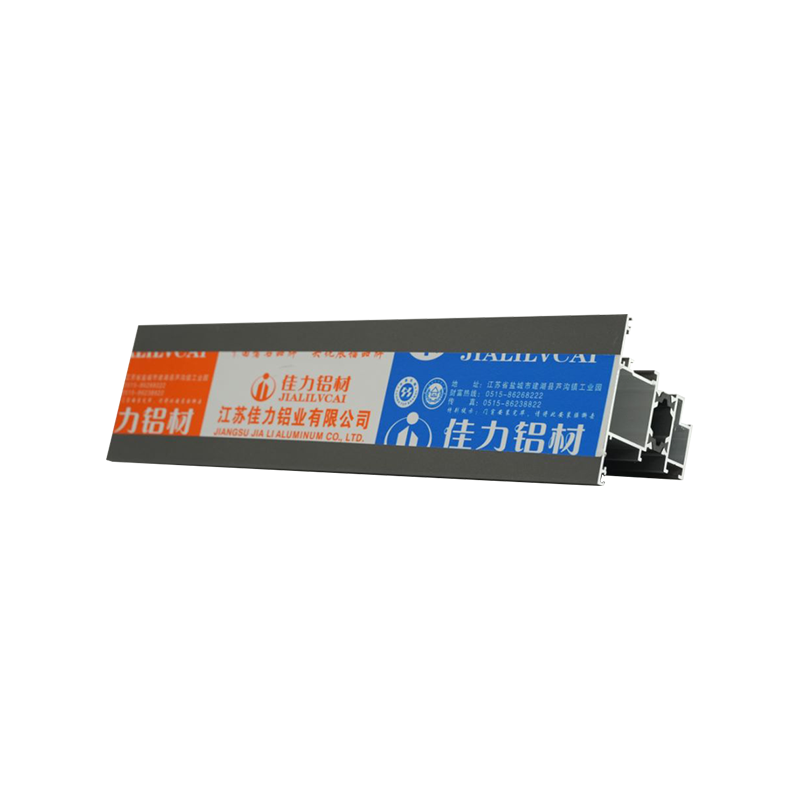
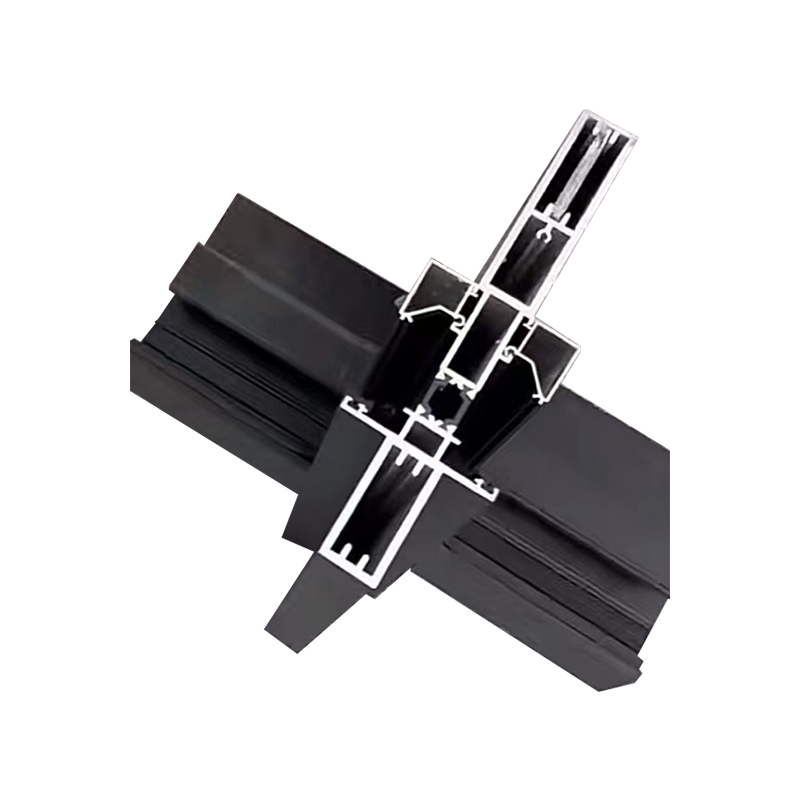
Architectural and Curtain Wall Profiles
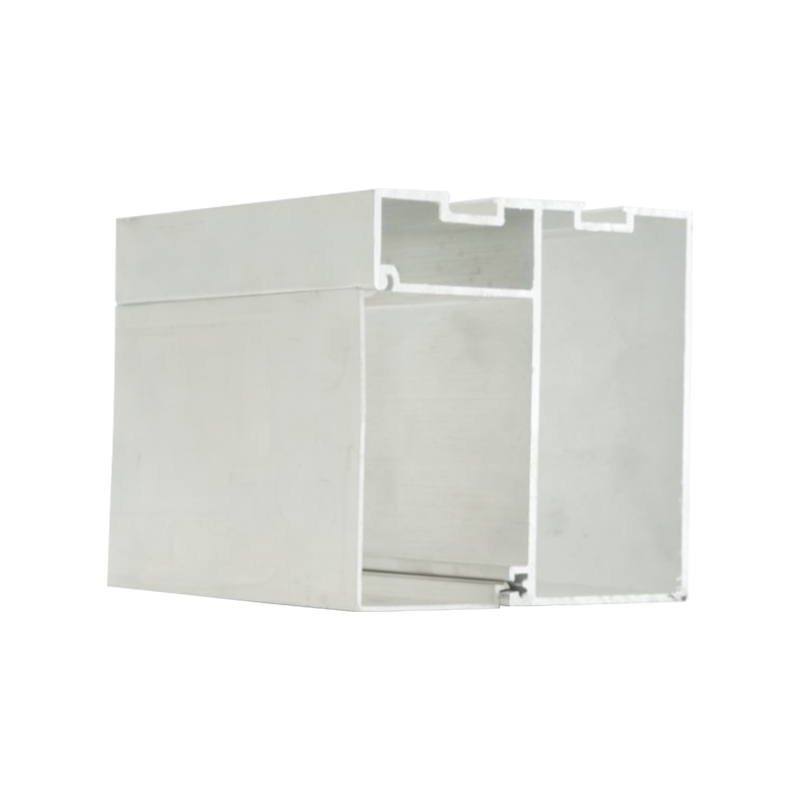
Architectural extrusion profiles are custom-designed for building facades, curtain wall systems, window frames, door frames, and decorative cladding. These profiles require precise dimensional tolerances to ensure weatherproofing, thermal break performance, and structural wind-load compliance.
- Thermally broken profiles integrate polyamide (PA66) insulating strips between inner and outer aluminum sections, reducing thermal conductivity to below 1.0 W/m²·K in high-performance systems.
- Standard curtain wall mullion depths range from 50 mm to 180 mm depending on span and wind pressure requirements.
- Surface treatment options include PVDF coating, anodizing, and electrostatic powder coating with film thickness of 60–120 μm.
Comparison of Main Aluminum Profile Types
| Profile Type | Cross-Section | Primary Use | Connection Method | Typical Size Range |
| T-Slot | Square/Rect. with slots | Industrial framing | T-nuts & bolts | 20×20 – 80×160 mm |
| Sleeve-Type | Round/Square with inner bore | Assembly lines, furniture | Internal sleeve connectors | 28×28 – 60×60 mm |
| Angle (L) | L-shape | Edge protection, corners | Drilled & bolted | 20×20 – 100×100 mm |
| Channel (U) | U-shape | Tracks, guides, glazing | Clip-in or screw | 10–80 mm inner width |
| Square/Rect. Tube | Hollow rect./square | Load-bearing frames | Welded or bolted | 25×25 – 120×60 mm |
| Heat Sink | Finned base plate | Thermal management | Mounted via base | Custom, 50–300 mm wide |
| Architectural | Complex custom | Facades, window frames | Mechanical fasteners | Custom per project |
How to Select the Right Aluminum Extrusion Profile
Choosing the correct profile type depends on four core criteria:
- Structural requirement: Determine if the profile must resist bending, torsion, axial compression, or combined loads. Tube profiles excel in multi-axis loading; angle profiles are best for simple corner reinforcement.
- Assembly method: T-slot and sleeve-type profiles enable tool-free or minimal-tool modular assembly. Welded tube structures offer higher permanent rigidity.
- Aesthetic requirement: Sleeve-type and architectural profiles prioritize clean visual lines. T-slot profiles expose hardware and are better suited for hidden industrial environments.
- Thermal performance: For electronics or lighting, select heat sink profiles with alloy 6063 and fin geometry matched to the power dissipation requirement.
For assembly-line and furniture applications where reconfigurability and appearance are both critical, sleeve-type aluminum profiles consistently deliver the best balance of structural integrity, hidden hardware, and design flexibility.
FAQ
Q1: What is the difference between a T-slot profile and a sleeve-type aluminum profile?
T-slot profiles use surface-mounted T-nuts and bolts for connections, leaving hardware visible. Sleeve-type profiles use internal connector sleeves inserted into bore holes at profile ends, hiding all hardware for a cleaner finish.
Q2: Which aluminum alloy is most commonly used for extrusion profiles?
Alloy 6063 is the most widely used for architectural and decorative profiles due to its smooth surface quality. Alloy 6061 is preferred for structural and high-strength applications.
Q3: Can sleeve-type aluminum profiles be used outdoors?
Yes. With anodized or powder-coated surface treatment, sleeve-type profiles provide adequate corrosion resistance for covered outdoor environments. Direct exposure to rain or salt air requires sealed connection points and appropriate alloy selection.
Q4: What standard lengths are aluminum extrusion profiles available in?
Most standard profiles are available in 6-meter lengths. Custom cut-to-length orders are common for project-specific requirements, with minimum cut lengths typically starting at 300 mm.
Q5: Are aluminum extrusion profiles recyclable?
Yes. Aluminum is 100% recyclable without loss of properties. Recycled aluminum requires only about 5% of the energy needed to produce primary aluminum, making extrusion profiles a sustainably favorable material choice.
Q6: How precise are the dimensional tolerances of extruded aluminum profiles?
Standard extrusion tolerances follow EN 755 or equivalent standards. Typical dimensional tolerances are ±0.2 mm to ±0.5 mm for cross-sectional dimensions depending on profile complexity and die condition.