ENG
ENG
 English
 русский
 中文简体
中文简体 Español
 Indonesia
What Are Corner Profiles and Why Do They Matter?
Corner profiles are linear trim components installed at wall, ceiling, floor, or panel edges to protect corners from physical damage, create clean finished edges, and enhance the visual appearance of surfaces. They are widely used in construction, interior finishing, tiling, drywall installation, and architectural cladding.
There are several distinct types of corner profiles, each suited to specific applications, materials, and aesthetic goals. The main categories include protection corner profiles, tile and plaster corner profiles, expansion joint profiles, decorative trim profiles, and supporting corner profiles. Choosing the correct type directly affects durability, installation quality, and long-term performance.
Protection Corner Profiles
Protection corner profiles are designed primarily to guard vulnerable 90-degree external corners against impacts, abrasion, and chipping. They are among the most commonly specified profiles in commercial and residential construction.
Key Characteristics
- Typically made from aluminum, stainless steel, PVC, or galvanized steel
- Applied to drywall corners, plastered walls, and masonry edges
- Available in standard leg lengths such as 25mm × 25mm or 30mm × 30mm
- Surface finishes include mill finish, anodized, or powder-coated options
In high-traffic environments such as hospitals, schools, and warehouses, impact-resistant aluminum or stainless steel profiles are preferred due to their ability to withstand repeated knocks without deforming.
Tile Corner Profiles
Tile corner profiles create neat, safe transitions at tiled surface edges, particularly where tiles terminate at an exposed corner. Without a tile profile, cut tile edges are sharp, prone to chipping, and visually unfinished.
Common Profile Shapes for Tiling
- L-shaped (square edge): Provides a clean 90-degree finish, suitable for contemporary interiors
- Rounded edge (bullnose style): Softens the corner, reducing injury risk in family bathrooms
- Schluter-style profiles: Feature a perforated anchor leg embedded in tile adhesive for a secure mechanical bond
Tile profiles are commonly available in heights matching standard tile thicknesses: 8mm, 10mm, and 12.5mm. Aluminum versions are the most popular due to their corrosion resistance in wet areas.
Plaster and Render Bead Profiles
Plaster beads and render profiles are embedded into wet plaster or render during application. They serve as a guide for achieving a straight, level, and well-defined corner line in plastered walls and ceilings.
Types of Plaster Beads
- Angle bead: Reinforces external corners and provides a screed guide for uniform plaster depth
- Stop bead: Terminates a plastered surface neatly where it meets another material
- Arch bead: Flexible profile that follows curved or arched openings
- Drip bead: Directs water away from the building facade, used in external render systems
Galvanized steel and stainless steel are the standard materials for plaster beads in most external applications, while PVC is commonly used internally due to its resistance to corrosion in damp conditions.
Supporting Corner Profiles
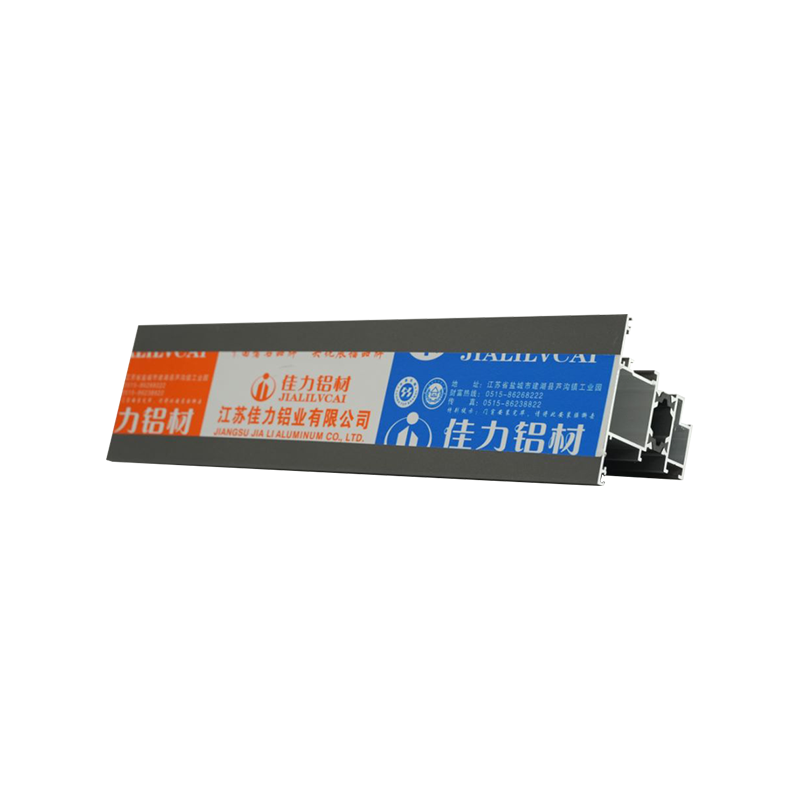
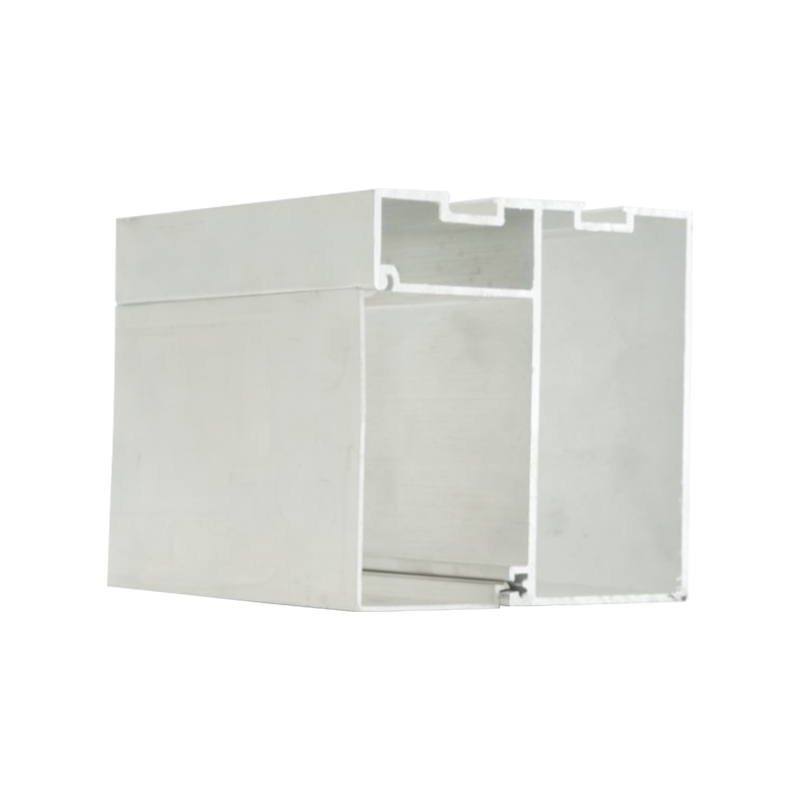
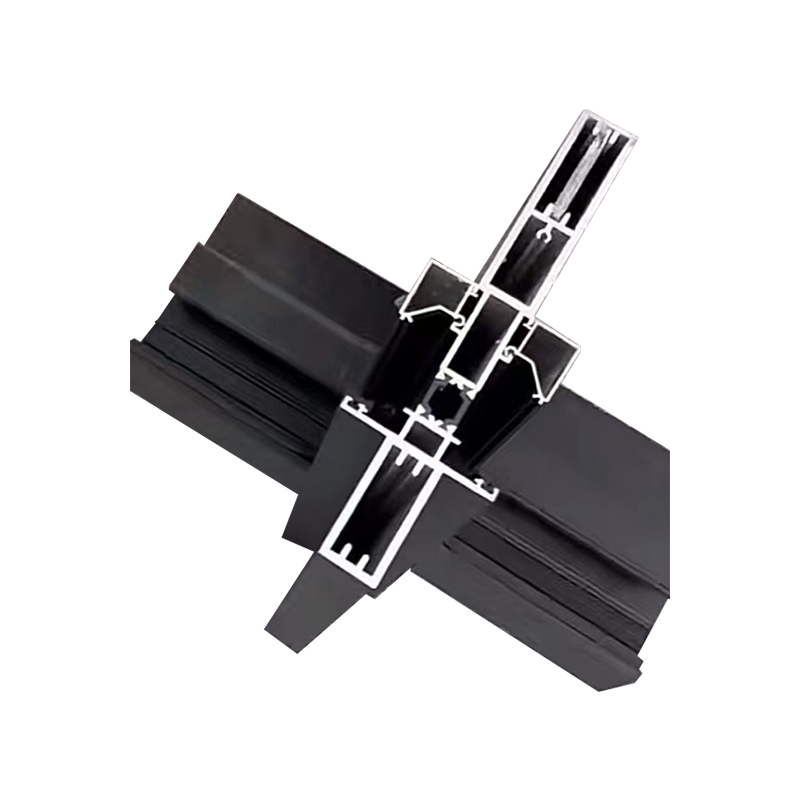
Supporting corner profiles are structural or semi-structural components that provide load-bearing or load-distributing functions at corners, in addition to their finishing role. They are widely used in curtain wall systems, facade cladding, modular panel assemblies, and aluminum framing structures.
What Sets Supporting Corner Profiles Apart
Unlike purely decorative or protective profiles, supporting corner profiles must meet defined mechanical performance criteria. Key properties include:
- Load-bearing capacity: Designed to carry the weight of cladding panels or transfer loads to the primary structure
- Dimensional precision: Tight tolerances (often within ±0.1mm) ensure correct alignment in modular systems
- Material grade: Typically extruded from 6063-T5 or 6061-T6 aluminum alloys for optimum strength-to-weight ratio
- Thermal break compatibility: Many supporting profiles incorporate polyamide thermal barriers to reduce heat transfer in energy-efficient facades
Typical Applications
| Application | Profile Function | Common Material |
| Curtain wall facade corners | Transfers panel loads to sub-frame | Extruded aluminum 6063-T5 |
| Composite panel systems | Provides fixing point and structural rigidity | Aluminum alloy with anodized finish |
| Modular interior partitions | Aligns panels and distributes compressive loads | Powder-coated aluminum |
| External insulation systems | Anchors insulation boards and cladding at corners | Galvanized steel or stainless steel |
Supporting corner profiles are typically engineered to order or selected from standard extrusion catalogs with cross-sections ranging from 40mm × 40mm to 100mm × 100mm or larger, depending on the structural demand of the project.
Expansion Joint and Movement Profiles
Expansion joint profiles accommodate thermal expansion, building movement, and substrate deflection at corners and junctions. Without them, surfaces crack, tiles debond, and sealant joints fail prematurely.
These profiles typically feature a central flexible element — such as a silicone strip, neoprene insert, or foam core — flanked by rigid aluminum or stainless steel wings that fix to the substrate. Movement capacity varies by product, but 5mm to 25mm of total movement is a common specification range for architectural expansion profiles.
Where They Are Used
- Floor-to-wall junctions in large-format tiled areas
- Building perimeter corners in curtain wall installations
- Screeded floor systems over underfloor heating
- Exterior render systems on large building facades
Decorative and Aesthetic Corner Profiles
Decorative corner profiles prioritize visual finish over structural performance. They are commonly used in furniture manufacturing, interior fit-out, and retail environments where edge detailing contributes to the overall design language.
Popular Types
- Rounded or half-round profiles: Soften edges on shelving, counters, and display units
- Stepped reveal profiles: Create shadow lines or recessed details between surface panels
- Cove and skirting profiles: Transition between floor and wall surfaces with a curved or angled detail
- LED channel profiles: Incorporate a slot or recess for LED strip lighting at corners or edges
Surface finishes for decorative profiles span brushed, mirror-polished, anodized gold or black, and powder-coated RAL colors, enabling precise coordination with interior design schemes.
How to Choose the Right Corner Profile Type
Selecting the correct profile requires evaluating several project-specific factors:
- Structural requirement: Does the corner need to carry load? If yes, specify a supporting corner profile with a defined load rating.
- Surface material: Tile, plaster, render, drywall, and cladding each have specific compatible profile types.
- Exposure conditions: Wet areas, external facades, and high-humidity environments require corrosion-resistant materials such as anodized aluminum or stainless steel.
- Movement tolerance: Floors over underfloor heating or large tiled areas exposed to thermal cycling need expansion profiles.
- Aesthetic intent: Match profile finish and geometry to the design specification.
A common mistake is selecting a purely decorative profile for an application that demands structural performance — always verify load and deflection requirements before specifying.
FAQ
Q1: What is the difference between a protection corner profile and a supporting corner profile?
A protection corner profile guards surfaces from physical damage. A supporting corner profile has a structural function — it transfers or distributes loads within a wall, facade, or panel assembly in addition to finishing the edge.
Q2: What materials are most commonly used for corner profiles?
Extruded aluminum (especially 6063-T5 alloy), stainless steel, galvanized steel, and PVC are the most widely used materials. Aluminum is favored for its lightweight, corrosion resistance, and ease of anodizing or powder coating.
Q3: Can corner profiles be used on curved walls?
Yes. Flexible arch beads and specially roll-formed or kerf-cut aluminum profiles can follow curved surfaces. Standard rigid profiles are suitable only for straight corners.
Q4: What profile height should I use for 10mm tiles?
Select a tile corner profile with a face height of 10mm to match the tile thickness and ensure the profile sits flush with the tile surface after adhesive bed depth is accounted for.
Q5: Are supporting corner profiles suitable for exterior facade applications?
Yes, provided they are manufactured from a corrosion-resistant alloy (such as 6063-T5 aluminum), correctly sealed against water ingress, and sized to handle wind load and cladding weight as specified by the project engineer.
Q6: How are expansion joint profiles installed at corners?
The rigid anchor legs are fixed to the substrate on each side of the joint before surface finishing. The flexible central element bridges the gap and absorbs movement. Sealant is sometimes applied at the junction between the profile wing and the finished surface.