ENG
ENG
 English
 русский
 中文简体
中文简体 Español
 Indonesia
The Direct Answer: How Groove-Guided Sliding Doors Work
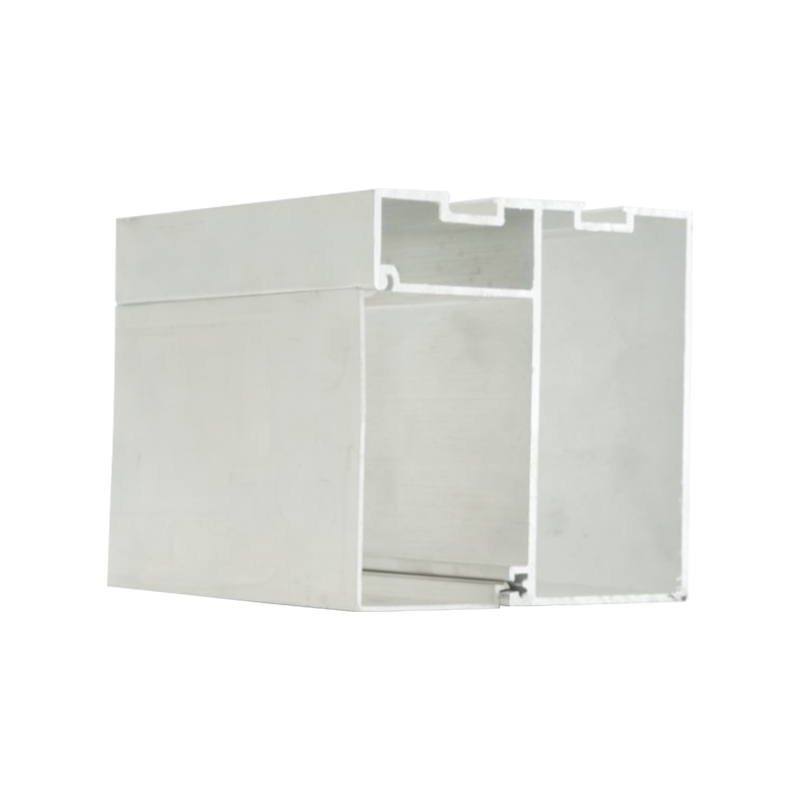
To build sliding doors with guides running in the groove of an aluminum profile, you fit a matching guide runner or slide block directly into the T-slot or C-channel groove of the extruded aluminum frame. The panel rides inside this groove, constrained laterally while sliding freely along the profile's length. This eliminates the need for exposed overhead tracks or separate rail hardware — the groove itself acts as both the structural channel and the guiding mechanism.
This approach is widely used with telescopic door aluminum profile systems, where multiple panels must slide and nest into one another in a compact, precise arrangement. The result is a clean, low-profile installation with minimal visible hardware.
Understanding the Groove Geometry in Aluminum Profiles
Before cutting any material or ordering components, you need to understand the groove dimensions of your chosen profile. Most extruded aluminum door profiles feature standardized groove widths, but they vary by series.
| Profile Series | Typical Groove Width | Typical Groove Depth | Common Use |
|---|---|---|---|
| 20 Series | 6 mm | 6 mm | Light panels, interior partitions |
| 30 Series | 8 mm | 8 mm | Medium-duty sliding doors |
| 40 Series | 10 mm | 10 mm | Heavy panels, industrial doors |
| 45 Series | 10 mm | 10 mm | Telescopic door systems |
The guide runner must be 0.2–0.5 mm narrower than the groove width to allow smooth travel without play or rattling. Too tight and friction causes binding; too loose and the door panel wobbles.
Choosing the Right Guide Runner or Slide Block
The guide component that sits inside the groove is the most critical element for smooth, long-lasting operation. There are three main types used in groove-guided sliding door systems:
1. Plastic Slide Blocks (HDPE or Nylon)
These are the most common choice for residential and light commercial installations. Nylon and HDPE blocks offer self-lubricating properties, quiet operation, and resistance to corrosion. They are machined or injection-molded to fit snugly in the groove and are attached to the bottom edge or top edge of the door panel.
- Best for panels up to 25 kg
- Minimal maintenance required
- Easy to replace if worn
2. Steel or Stainless Steel Runners
Used in industrial and heavy-duty applications where panel weights exceed 30 kg or where high-cycle usage is expected. Steel runners withstand higher side loads but require periodic lubrication with a dry PTFE spray or silicone grease to prevent wear on the aluminum groove.
3. Integrated Wheel or Roller Guides
In larger telescopic door configurations, small roller wheels with flanged edges are fitted into the groove channel. The flange rides against the inner groove wall, providing both vertical support and horizontal constraint. This approach is preferred when panel weight exceeds 40 kg or when very low-friction travel is required over long distances (over 2 meters).
Step-by-Step: Building the Sliding Door with Groove Guides
- Measure and cut the aluminum profile frame — Cut the top and bottom horizontal profiles to the exact width of the door opening. For telescopic systems, account for the overlap distance between panels (typically 50–80 mm per panel pair).
- Machine the panel edge to accept the guide — The edge of the door panel (glass, composite, or sheet) that enters the groove must be reduced to a thickness that fits: typically 4–8 mm depending on groove width. Use an aluminum extrusion as a panel frame if the panel material itself is too thick.
- Attach guide blocks to the panel — Fix the slide blocks or roller guides to the top and bottom edges of the panel at intervals of 300–500 mm for heavy panels, or at each end for lightweight panels under 10 kg.
- Insert the panel into the groove — Tilt the panel slightly to insert the top guide into the upper groove first, then lower the bottom guide into the lower groove channel. For telescopic systems, insert panels in sequence from outermost to innermost.
- Fit end stops — Install mechanical end stops inside the groove at both travel limits to prevent the panel from sliding out. These are typically press-fit plastic plugs or M6 bolts inserted into the groove T-nut slot.
- Test travel and adjust — Slide the panel through its full range. Check for binding, tilt, or excessive play. Adjust guide block thickness or add PTFE tape to the groove walls if needed.
Key Design Considerations for Telescopic Sliding Doors
Panel Overlap and Stack Width
In a telescopic configuration, each panel must overlap the next by at least 50 mm when fully open to ensure the guide stays engaged in the groove. The total stack width (all panels nested together when open) determines how much wall or pocket space you need to allow.
For example, a 3-panel telescopic door covering a 2,400 mm opening — with 60 mm overlap per pair and 40 mm panel frames — requires approximately 760–800 mm of stack space when fully retracted.
Vertical Clearance in the Groove
The groove must provide at least 1.5× the guide block height in depth so the panel can be lifted and removed for maintenance without disassembling the frame. A 10 mm deep groove allows a guide block of up to 6 mm height, leaving 4 mm of lift clearance.
Groove Lubrication
For aluminum-on-plastic contact, no lubrication is typically needed. For metal-on-metal contact (steel runners in aluminum groove), apply a thin film of dry PTFE lubricant spray every 12–18 months under normal usage. Avoid oil-based lubricants as they attract dust and cause buildup that increases friction over time.
Load Distribution Along the Profile
The aluminum profile must be sized to handle both the panel weight and any lateral forces from wind load or accidental impact. For panels heavier than 20 kg, use profiles with a wall thickness of at least 2.5 mm and consider adding a reinforcing inner web if the profile spans more than 1.8 meters unsupported.
Common Mistakes to Avoid
- Using guide blocks that are too tight in the groove — causes binding and accelerated wear on both the block and the groove walls
- Skipping end stops — panels can slide fully out of the groove, creating a safety hazard
- Ignoring panel squareness — if the panel is not square, it will skew inside the groove and jam, especially over longer travel distances
- Using incompatible groove series — a guide block sized for a 30-series profile will be too loose in a 20-series groove and too tight in a 40-series profile
- Not accounting for thermal expansion — aluminum expands approximately 23 µm per meter per °C; over a 2-meter profile with a 30°C temperature range, that is nearly 1.4 mm of expansion, which must be accommodated in the guide fit tolerance
FAQ
Q1: What is the minimum groove depth needed to safely retain a sliding door panel?
The groove depth should be at least 1.5 times the guide block height. For most residential panels, a groove depth of 8–10 mm with a 5–6 mm guide block provides both retention and lift-out clearance for maintenance.
Q2: Can glass panels be used directly in the groove without a frame?
Yes, if the glass edge is polished and the groove is lined with a soft PVC or rubber gasket strip to protect the glass edge and provide a snug fit. The groove width must match the glass thickness — typically 6 mm or 8 mm for tempered glass.
Q3: How many guide blocks does each panel need?
At minimum, two guide points per panel (one at each end of the top edge and bottom edge). For panels longer than 1.2 meters or heavier than 15 kg, add a third guide block at the midpoint of each edge to prevent sagging and skewing.
Q4: Is a bottom groove necessary, or can the door hang from the top groove only?
A bottom groove guide is strongly recommended for any panel heavier than 8 kg or taller than 1.0 meter. Top-hung-only systems require the top profile to carry the full panel weight, which demands a much heavier profile section and precise leveling.
Q5: What groove profile is best for a telescopic door with three or more panels?
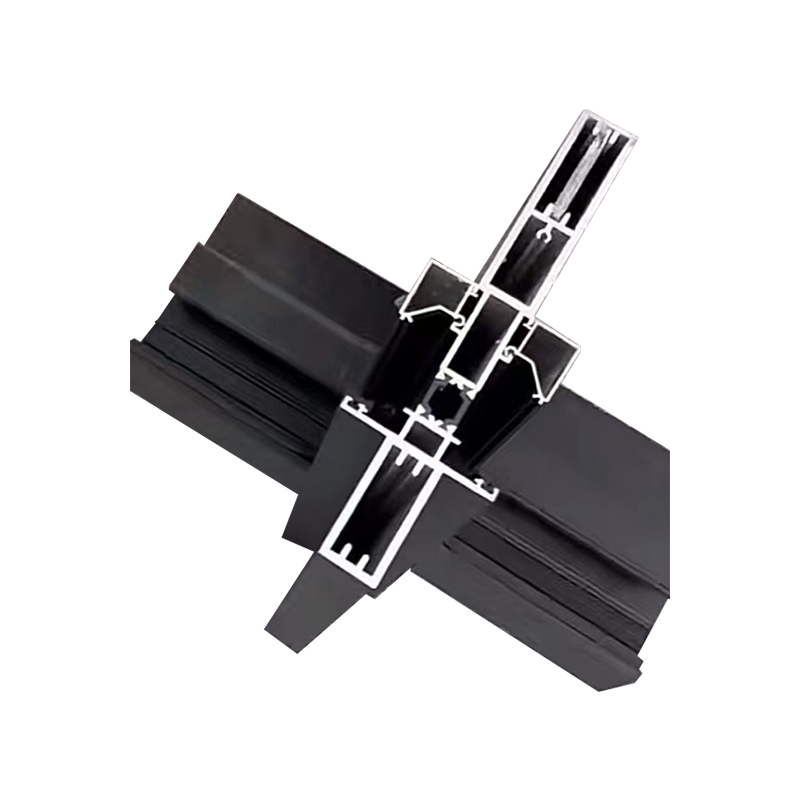
Use a multi-channel aluminum profile that provides a separate groove lane for each panel. Each panel's guides run in its own dedicated groove, preventing interference between panels during travel and allowing independent removal of each leaf.
Q6: How do I prevent the guide block from jumping out of the groove under impact?
Install a retaining lip or groove cover strip along the open face of the groove, or choose a C-channel profile whose opening is narrower than the guide block width — the block can only be inserted by tilting, and cannot exit under normal lateral loads.