ENG
ENG
 English
 русский
 中文简体
中文简体 Español
 Indonesia
The window architectural aluminum profile is a fundamental component in modern construction, widely used in residential, commercial, and industrial applications. Its structural integrity directly influences building performance, thermal efficiency, and overall durability. Among the various manufacturing processes, aluminum extrusion plays a pivotal role in defining the mechanical properties of these profiles. Understanding how extrusion impacts the strength of window architectural aluminum profile is essential for architects, engineers, and procurement professionals who seek optimal performance and longevity.
Understanding Aluminum Extrusion
Aluminum extrusion is a metal forming process in which aluminum billets are heated and forced through a die to produce continuous profiles with specific cross-sectional shapes. This method allows for the creation of complex geometries, including channels, fins, and hollow sections, which are commonly required in architectural applications. The extrusion process aligns the aluminum grains along the profile’s longitudinal axis, which significantly influences the mechanical behavior of the finished product.
Key Advantages of Extrusion
The extrusion process offers several advantages relevant to window architectural aluminum profile:
- Design Flexibility: Complex cross-sections can be manufactured efficiently without requiring secondary fabrication steps.
- Enhanced Mechanical Properties: The alignment of grains during extrusion enhances tensile strength and resistance to bending along the profile’s length.
- Consistency and Precision: Extruded profiles exhibit uniform dimensions and surface quality, which is critical for accurate assembly in windows and curtain walls.
- Integration of Functional Features: Extrusion allows the incorporation of thermal breaks, grooves, and channels directly into the profile, improving both structural and thermal performance.
Impact of Extrusion on Strength
The strength of a window architectural aluminum profile depends heavily on the extrusion process. This section explores the primary factors affecting mechanical performance:
Grain Structure and Orientation
During extrusion, aluminum crystals elongate in the direction of flow, creating a directional grain structure. This microstructural alignment increases tensile and yield strength along the extrusion axis, enhancing the profile’s ability to resist deformation under load. However, the directional nature also means that strength perpendicular to the extrusion axis may be comparatively lower, which must be considered in design and installation.
Work Hardening
The extrusion process involves plastic deformation of the aluminum, which induces work hardening. This phenomenon increases dislocation density within the material, thereby enhancing hardness and strength. Depending on the alloy type and extrusion parameters, work hardening can significantly improve the load-bearing capacity of window architectural aluminum profile, especially in thin-walled sections.
Thermal Treatment
Post-extrusion thermal treatments, including annealing and aging, further influence profile strength. Controlled heat treatment can relieve residual stresses and optimize mechanical properties. For instance, age-hardened alloys exhibit improved tensile strength and dimensional stability, which is crucial for high-rise window frames and curtain wall applications.
Material Considerations
Selecting the appropriate aluminum alloy is essential to maximize the benefits of extrusion. Common alloys for window architectural aluminum profile include 6063, 6061, and 6005 series. Each alloy exhibits distinct strength characteristics, corrosion resistance, and thermal conductivity.
Table 1: Common Aluminum Alloys for Window Architectural Aluminum Profile
| Alloy | Typical Tensile Strength (MPa) | Corrosion Resistance | Extrusion Suitability | Notes |
|---|---|---|---|---|
| 6063 | 150-230 | High | Excellent | Widely used for architectural applications due to smooth surface finish. |
| 6061 | 240-310 | Moderate | Good | Stronger alloy suitable for load-bearing structures. |
| 6005 | 215-280 | Moderate-High | Excellent | Offers a balance of strength and extrudability, ideal for window frames. |
The combination of alloy selection and extrusion process determines the final performance of window architectural aluminum profile in both static and dynamic applications.
Design and Cross-Section Influence
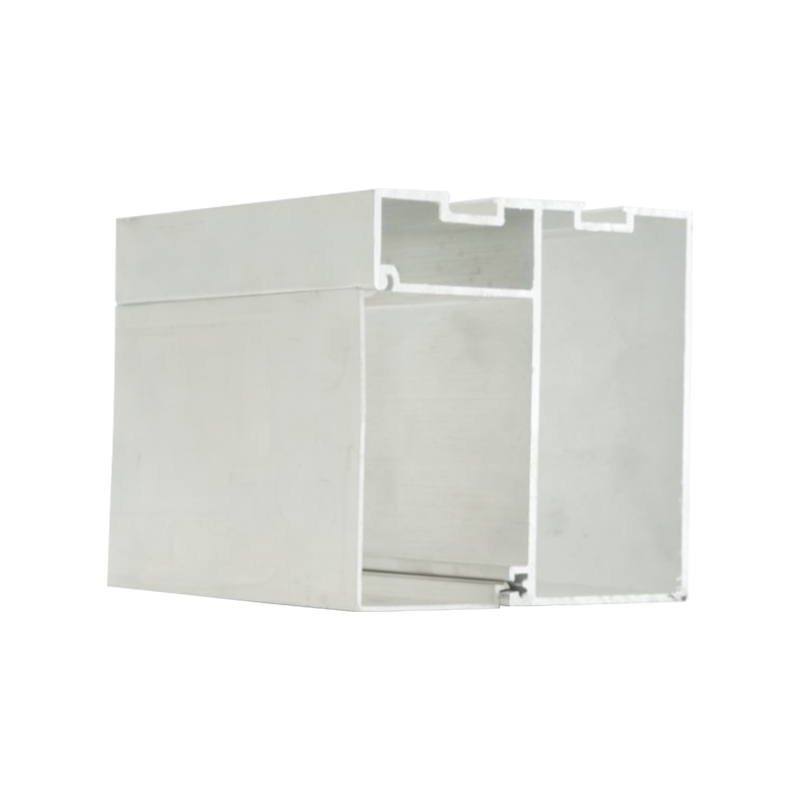
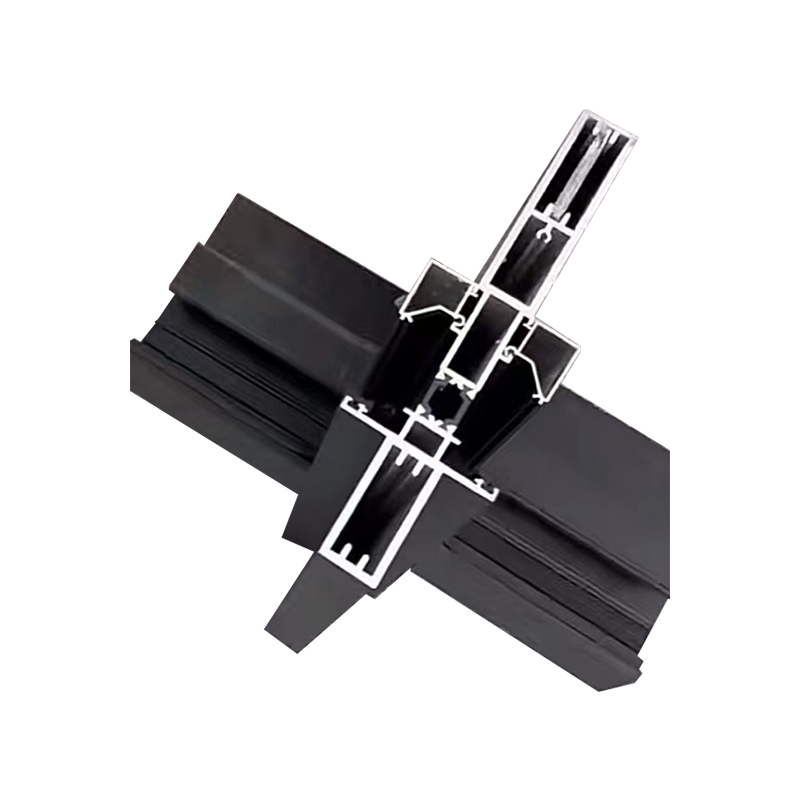
The mechanical performance of a window architectural aluminum profile is not solely dependent on material properties but also on cross-sectional design. Extrusion enables precise control over profile geometry, allowing the creation of optimized shapes that enhance bending resistance, torsional rigidity, and load distribution.
Table 2: Cross-Section Shapes and Structural Performance
| Shape | Structural Advantages | Typical Applications |
|---|---|---|
| Rectangular Hollow | High bending stiffness; efficient material use | Window frames, curtain wall mullions |
| T-Slot Profile | Modular assembly; load distribution along slots | Sliding window systems, operable panels |
| L-Shaped Angle | Corner reinforcement; load transfer | Window corners, frame joints |
| Multi-Chamber | Thermal insulation; high torsional resistance | Energy-efficient windows, high-rise buildings |
By leveraging extrusion, manufacturers can integrate multiple chambers, reinforcements, and channels in a single profile, improving both structural and thermal performance.
Surface Treatments and Strength Correlation
Although aluminum extrusion primarily affects mechanical properties, surface treatments also play a role in maintaining long-term strength. Anodizing, powder coating, and mechanical polishing enhance corrosion resistance and prevent surface degradation that could compromise structural integrity. In outdoor applications, protective coatings prevent pitting and maintain the load-bearing capacity of the window architectural aluminum profile over time.
Practical Considerations in Procurement
When selecting window architectural aluminum profile for construction projects, understanding extrusion-related factors is critical:
- Alloy Type: Confirm that the alloy is suitable for the expected load conditions and environmental exposure.
- Extrusion Quality: Check for uniform grain structure and absence of defects such as cracks or voids.
- Dimensional Accuracy: Ensure that extruded profiles meet tolerance requirements for seamless assembly.
- Thermal Treatment: Verify if profiles are supplied in an age-hardened or annealed state to match strength specifications.
- Surface Finish: Consider anodized or coated profiles for corrosion-prone environments to maintain structural integrity.
Environmental and Load Considerations
The strength of a window architectural aluminum profile is not static and can be affected by environmental factors:
- Temperature Fluctuations: Aluminum experiences expansion and contraction, which can introduce stresses if profiles are not properly supported.
- Wind Load: High-rise buildings require profiles that can withstand significant wind pressure without deformation.
- Seismic Activity: Flexible yet strong extruded profiles provide enhanced resistance to dynamic loads during earthquakes.
Understanding how extrusion influences grain structure and work hardening is essential for predicting profile behavior under these conditions.
Quality Control and Testing
Ensuring consistent strength in window architectural aluminum profile requires rigorous quality control:
- Tensile Testing: Confirms that profiles meet specified mechanical properties.
- Hardness Testing: Verifies work-hardening effects and surface treatment performance.
- Dimensional Inspection: Ensures profiles adhere to design specifications.
- Surface Analysis: Detects defects that may compromise corrosion resistance and mechanical integrity.
Quality control not only guarantees strength but also extends the lifespan of the finished window assemblies.
Summary
Aluminum extrusion is a fundamental process that significantly affects the strength and performance of window architectural aluminum profile. By aligning grains, inducing work hardening, and enabling precise cross-sectional design, extrusion enhances load-bearing capacity and structural stability. Combined with appropriate alloy selection, thermal treatment, and surface protection, extruded profiles provide reliable performance across a range of applications. Understanding these factors is essential for architects, engineers, and procurement professionals seeking durable, high-performance window solutions.
FAQ
Q1: Can aluminum extrusion alone determine the strength of a window architectural aluminum profile?
A1: No, while extrusion greatly influences grain structure and mechanical properties, alloy selection, thermal treatment, and design geometry also play critical roles.
Q2: How does the cross-sectional design affect the strength of extruded profiles?
A2: Optimized cross-sections, such as multi-chamber or hollow designs, improve bending resistance, torsional rigidity, and load distribution, enhancing overall structural performance.
Q3: Are surface treatments important for structural integrity?
A3: Yes, treatments like anodizing and powder coating protect against corrosion and surface degradation, maintaining the profile’s load-bearing capacity over time.
Q4: Can extruded aluminum profiles be customized for high-rise applications?
A4: Absolutely. Extrusion allows for complex geometries and reinforced designs suitable for wind, seismic, and thermal loads in tall buildings.
Q5: What testing is recommended to ensure profile strength?
A5: Tensile testing, hardness testing, dimensional inspection, and surface analysis are commonly used to verify mechanical and structural properties.
References
- Davis, J. R., Aluminum and Aluminum Alloys, ASM International, 1993.
- Totten, G. E., & MacKenzie, D. S., Handbook of Aluminum: Vol. 1: Physical Metallurgy and Processes, CRC Press, 2003.
- Kaufman, J. G., Introduction to Aluminum Alloys and Tempers, ASM International, 2000.