ENG
ENG
 English
 русский
 中文简体
中文简体 Español
 Indonesia
If you are designing a machine frame, a workbench, or a conveyor stand with 40x40 aluminum profiles, the first question is almost always the same: how much load can it carry? The honest answer is that a 40x40 profile has no single load rating. Its capacity depends on span length, orientation, alloy and temper, wall thickness, and the deflection limit the application can tolerate.
Consider a standard 40x40 profile in 6063-T5, simply supported at both ends. Center-load it with 100 kg across an 800 mm span and it deflects about 2 mm. Stretch the span to 1,500 mm and the same 100 kg load produces more than 12 mm of deflection. The first practical lesson is simple: span matters more than almost any other variable.
What 40x40 Means and What It Does Not
The name describes a nominal cross-section of 40 mm by 40 mm from the metric T-slot framing family. Four open slots run along the length to accept T-nuts, bolts, bracket connectors, and panel fasteners, which is why these profiles assemble quickly and stay easy to reconfigure.
The name does not, however, fix the structural properties. Two profiles that both measure 40x40 can have very different load capacities because:
- Wall thickness varies. Light-duty versions are around 1.4 mm thick; heavy-duty versions can reach 4 mm or more.
- Alloy and temper vary. 6063-T5 is the most common, while 6061-T6 and 6005A appear in higher-strength extrusions.
- Internal geometry varies. Some 40x40 profiles are essentially square tubes with slots; others add internal ribs that raise the moment of inertia significantly.
Weight per meter is a useful first indicator: a light 40x40 weighs about 1.4 kg/m, while a heavy version can reach 2.5 kg/m with two to three times the moment of inertia. Always request the exact moment of inertia and wall thickness values from the datasheet before calculating.
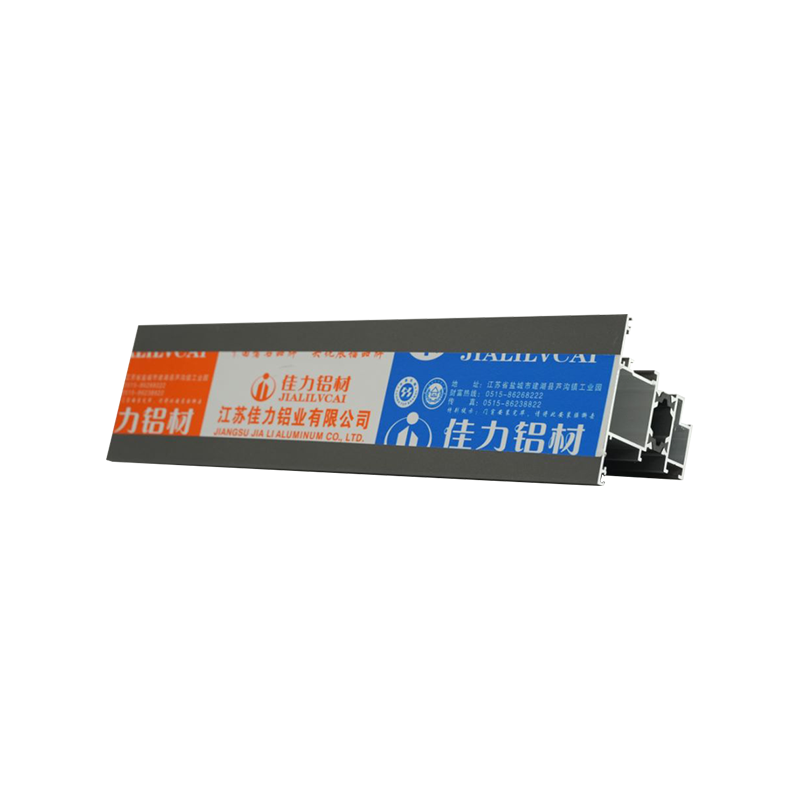
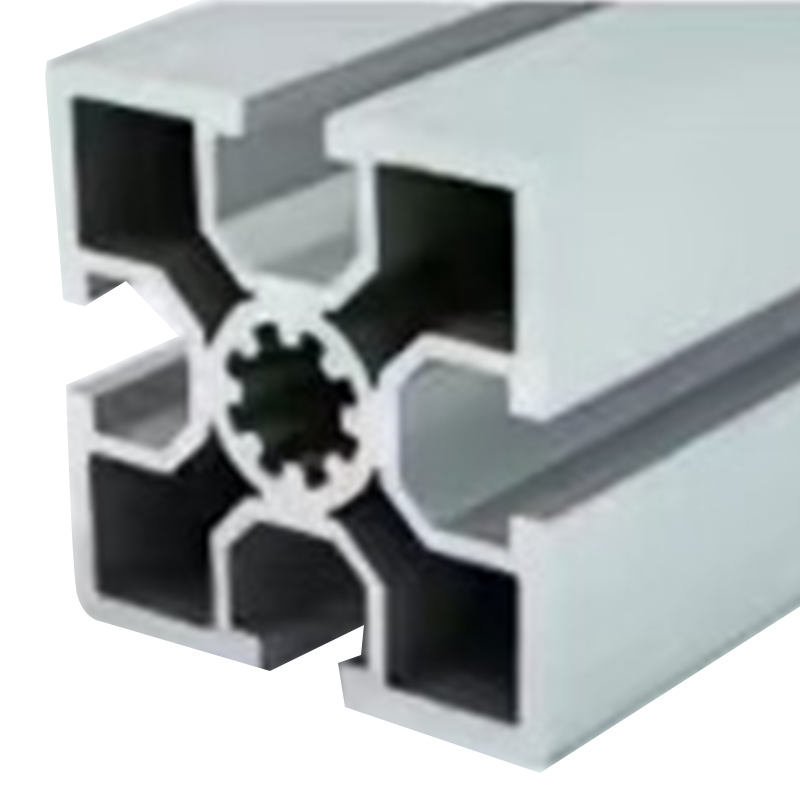 40x40 Flow Aluminum Profile for Structural FramesThis square aluminum profile offers a balance of strength and low weight, making it suitable for automation frames and workstations. Its precise 40mm cross-section and surface customization options support reliable assembly when paired with standard connectors.View Product →
Six Factors That Define the Real Load Capacity
Experienced frame designers check the same six items before approving any 40x40 structural application.
- Alloy and temper. Yield strength determines when the profile deforms permanently. 6063-T5 is about 110 MPa; 6061-T6 is roughly double that.
- Wall thickness and weight per meter. Thicker walls add section modulus and resist local buckling where loads enter the slots.
- Moment of inertia. This geometry value controls bending deflection. Look for Ix and Iy in the product datasheet, usually expressed in cm⁴.
- Span and support condition. A simply supported span, a cantilever, and a fixed span all behave differently. Deflection grows with the cube of the span.
- Load type and position. A midspan point load bends the profile more than the same total load spread evenly. Dynamic loads require an impact factor, usually 1.2 to 2.0.
- Deflection limit. A guard frame may tolerate L/150, while a linear-guide support may need L/500. The functional requirement decides the number.
Quick reference: elastic modulus for structural aluminum alloys: 69,000 N/mm². Typical 40x40 moment of inertia range: 3.5 to 15 cm⁴. Common wall thickness range: 1.4 to 4 mm.
How to Estimate Load Capacity in Two Checks
A first-pass estimate needs only two manual calculations.
Check 1: Deflection
For a simply supported profile with a concentrated load at midspan, the maximum deflection is:
δ = P L³ / (48 E I)
where P is the load in newtons, L is the span in millimeters, E is 69,000 N/mm², and I is the moment of inertia in mm⁴ (1 cm⁴ = 10,000 mm⁴).
Example: a 40x40 profile with I = 7.5 cm⁴ (75,000 mm⁴), a 1,000 mm span, and a 100 kg center load gives δ = 981 × 1,000³ / (48 × 69,000 × 75,000) = 3.9 mm. With a common L/200 limit, the maximum allowed deflection is 5 mm, so this combination passes the deflection check.
Check 2: Bending Stress
Deflection is not the only limit. The profile must also stay below the allowable bending stress: σ = M / S, where M = P L / 4 for a midspan load and S is the section modulus, equal to I divided by half the profile height.
For the same example, M = 245,250 N·mm and S = 3,750 mm³, so σ is about 65 MPa. Against a 6063-T5 yield strength of 110 MPa with a safety factor near 1.7, that is borderline. Moving to 6061-T6 or a heavier 40x40 series removes the concern.
| Span (mm) | Maximum load for L/200 (kg) | Maximum load for L/300 (kg) |
|---|---|---|
| 500 | 500 | 340 |
| 1,000 | 125 | 85 |
| 1,500 | 55 | 37 |
| 2,000 | 30 | 21 |
Use the table as a screening tool, not a guarantee. If the design sits below half the tabulated value, the 40x40 is comfortably safe. If it sits above, choose a stiffer section or add midspan supports.
When 40x40 Is Not Enough: The 40x80 Case
The most common upgrade is a 40x80 profile: the same 40 mm slot system, but with an 80 mm structural direction. Its moment of inertia about the strong axis is roughly eight to ten times that of a typical 40x40, because bending stiffness scales with the cube of section height. That converts directly into load capacity: a configuration limited to about 55 kg on a 40x40 at 1,500 mm can carry several hundred kilograms on a 40x80 loaded through the 80 mm axis.
40x80 is the right choice for table frames, gantry supports, and any beam longer than one meter carrying serious static or dynamic load. Orientation is critical: if the profile is laid flat, the 40 mm axis behaves like a 40x40, so the drawing must clearly show which axis receives the load.
Consider the upgrade when you see any of these conditions: Span above 1,000 mmLoad above 100 kg per beamPrecision alignment required
The full selection logic is explained in our guide to selecting a 40x80 flow aluminum profile by material properties.
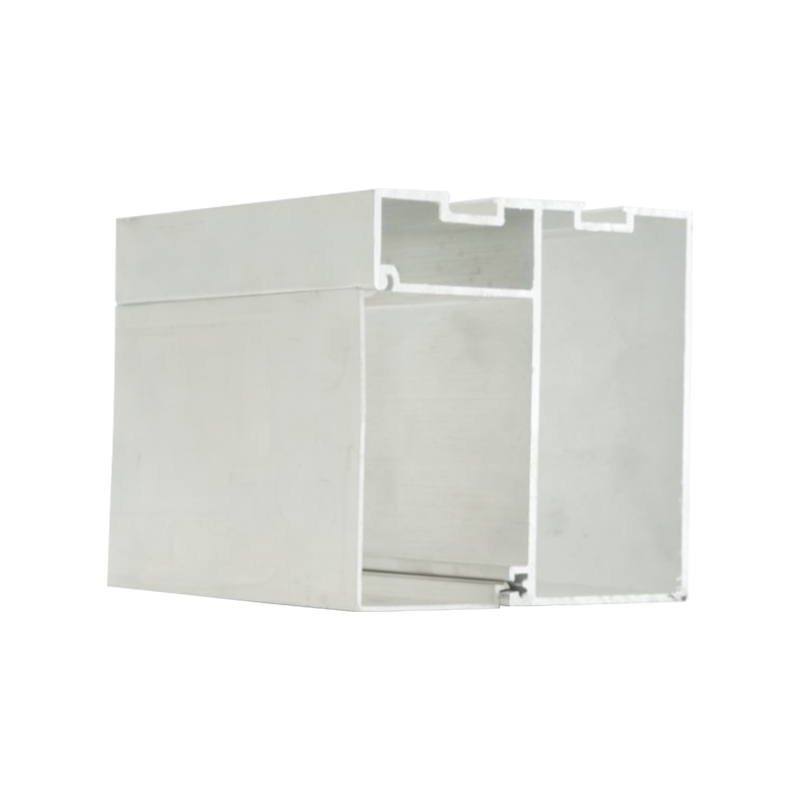
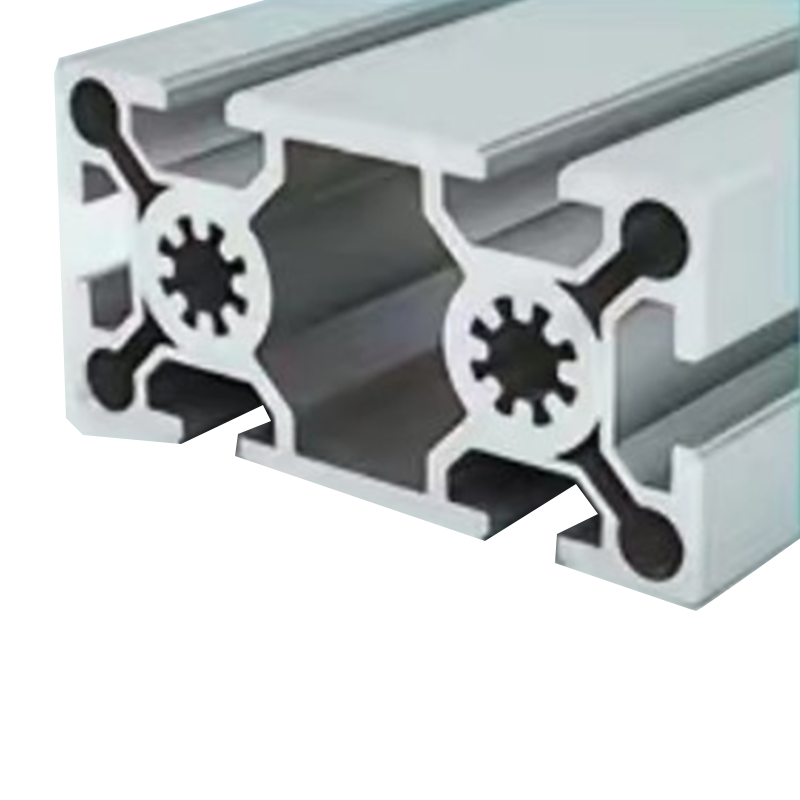 40x80 Wide Rectangular Aluminum ProfileWith a wider 80mm side, this profile provides increased load capacity for equipment supports and production lines. Its standardized connection accessories enable quick, weld-free assembly, and its surface finishes enhance durability and appearance.View Product →
Five Mistakes That Inflate the Apparent Capacity
- Ignoring the connector. The profile may bend within its limit, but a weak bracket or T-slot joint will still fail. Joint pull-out strength is often the real load limit of a frame.
- Loading the weak axis. A 40x40 is symmetric, but a 40x80 or a ribbed profile is not. Loading the weak axis can cut the effective capacity dramatically.
- Forgetting dynamic load. Motors, eccentric rollers, and pneumatic cylinders can double the effective load. Apply an impact factor before sizing the profile.
- Choosing an optimistic deflection limit. L/150 may suit a static shelf, but a positioning base needs L/300 or tighter. Set the limit from the functional requirement.
- Neglecting buckling. Long vertical posts can buckle at loads far below their bending capacity. Check the unsupported length and use the Euler buckling formula before finalizing the design.
Where 40x40 Is the Right Choice
40x40 profiles are the economical default when spans stay short and loads stay moderate. The typical sweet spots are:
- Workstation and assembly-table frames with legs spaced 600 to 800 mm apart;
- Machine guarding enclosures and protective screens;
- Light conveyor side rails and stands;
- Shelving, display structures, and aluminum furniture frames;
- Test benches and prototype fixtures.
For loads above roughly 100 kg per node, or spans above 1,000 mm, evaluate a heavier 40x40 series, a 40x80, or additional supports before ordering. Inside that envelope, the standard metric T-slot system keeps assembly fast and future changes inexpensive.
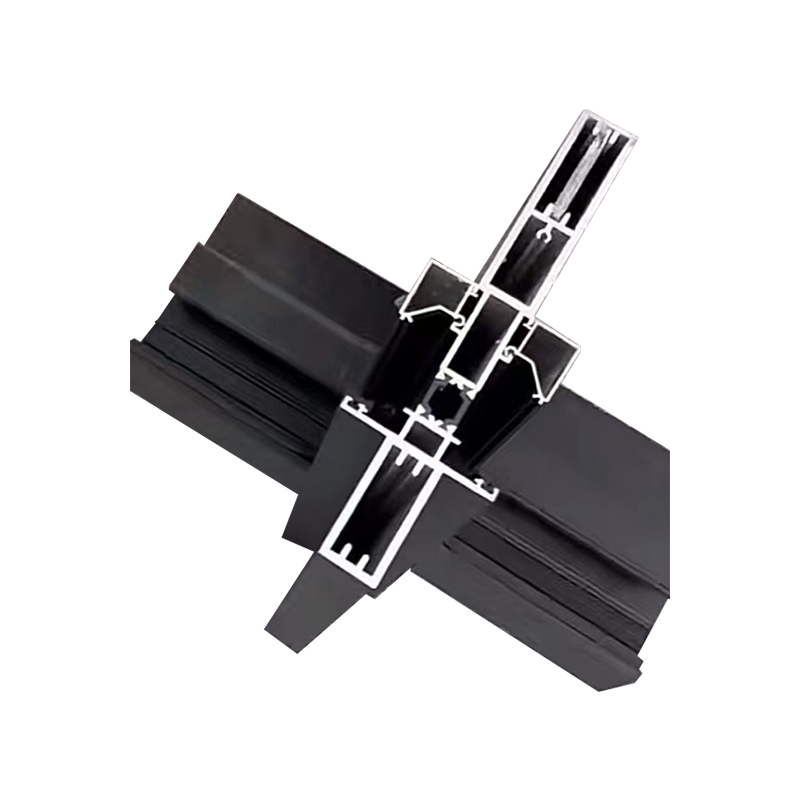
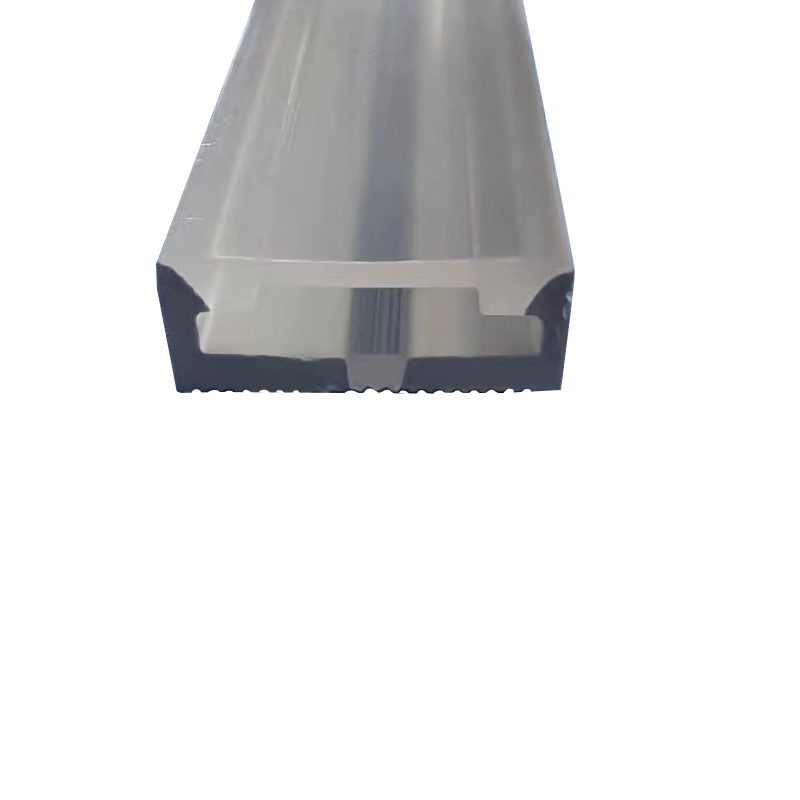 Sleeve-Type Aluminum Profile for Heavy FramesDesigned for high-strength applications, this sleeve-type profile improves bending and torsion resistance while remaining lightweight. Its connection system allows flexible, weld-free framing for industrial automation, equipment racks, and display structures.View Product →
Frequently Asked Questions
Q1: How much weight can a 40x40 aluminum profile support?
It depends on span, orientation, alloy, wall thickness, and deflection limit. For a simply supported 1 m span in 6063-T5 with a total-load deflection limit of L/200, a typical 40x40 handles roughly 125 kg at midspan. At 1.5 m, that figure drops to about 55 kg. Run the two checks in this article instead of relying on a single rating.
Q2: What is the difference between 6063-T5 and 6061-T6 for a 40x40 frame?
The elastic modulus is identical for both alloys, so deflection under the same geometry is essentially the same. The difference is yield strength: 6063-T5 is around 110 MPa, while 6061-T6 reaches roughly 240 MPa. Choose 6061-T6 when bending stress is tight or shock loads are expected; choose 6063-T5 when anodizing quality, corrosion resistance, and cost matter more.
Q3: Can I strengthen a 40x40 frame without changing the profile size?
Yes. Reduce unsupported spans by adding vertical or diagonal supports, use gusset plates at corners, insert steel bars into the slots, and select a heavy-duty 40x40 series with thicker walls. All of these add stiffness without changing the slot geometry.
Q4: What deflection limit should I use for a machine frame?
L/200 is a reasonable starting point for general frames and workstations. Use L/300 for bases that support moving parts, and L/500 or tighter for precision equipment such as linear guide rails and measurement fixtures. The correct limit is the one that keeps the functional requirement satisfied under load.
Q5: How do I decide between 40x40 and 40x80?
Use 40x40 when spans are under about 1,000 mm and loads stay below about 100 kg per member. Move to 40x80 when you need significantly higher stiffness on one axis, especially for horizontal beams longer than one meter. The 40x80 must be oriented with the 80 mm dimension in the bending plane to gain its advantage.
The load capacity of a 40x40 aluminum profile is never a fixed number. It is the result of the profile series, alloy, span, support condition, and deflection standard. Define the limit from the function, calculate the governing case, apply a realistic safety factor, and confirm that the joint hardware is as strong as the profile. When in doubt, stiffen the section or shorten the span; both are cheaper than rebuilding a sagging frame.
If you need exact section properties, machining services, or help with a specific 40x40 design, browse our full aluminum profile range or contact our technical support team with the load case and span drawing.