ENG
ENG
 English
 русский
 中文简体
中文简体 Español
 Indonesia
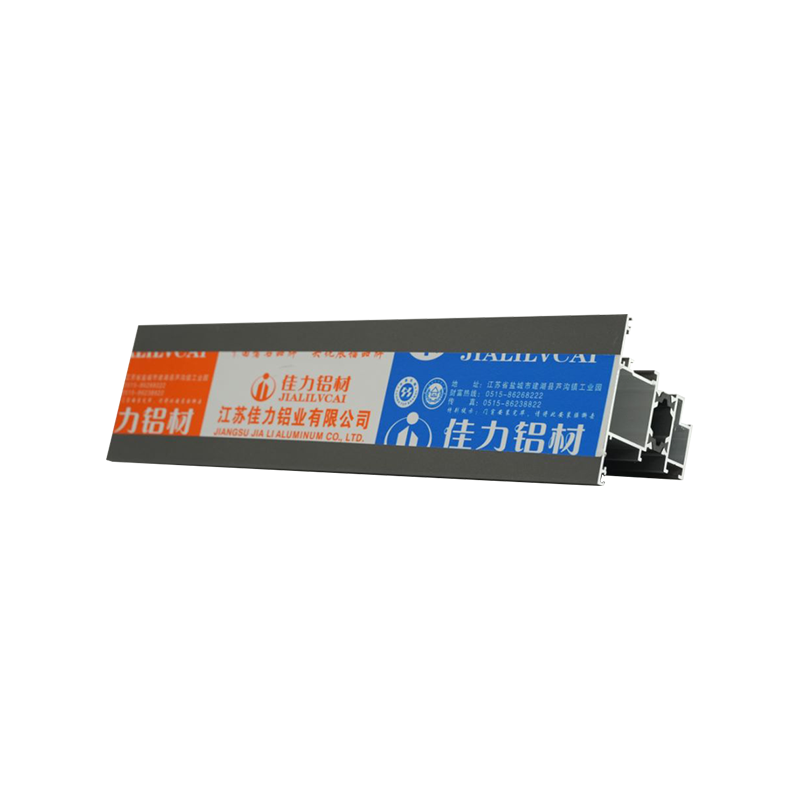
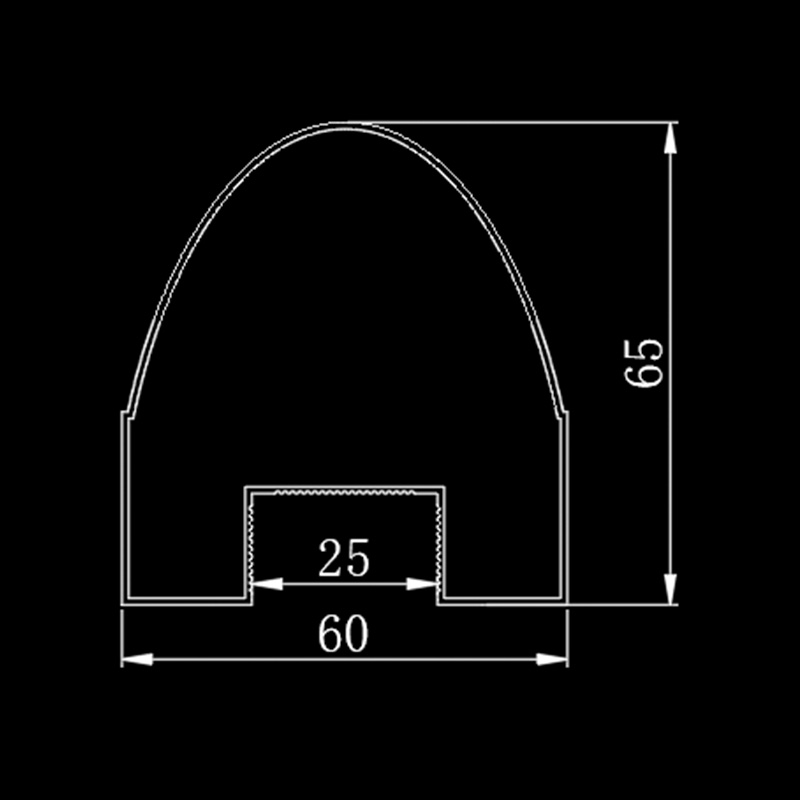
In the realm of industrial automation and high-cycle specialized enclosures, the choice of framing material is not merely a structural decision—it is a performance variable. Extruded aluminum profiles have moved beyond basic framing to become the core enabler of motion precision, load distribution, and environmental sealing. This analysis dissects the engineering logic behind specialized profile geometries, focusing on telescopic door aluminum profile, sleeve-type aluminum profile, and their integration into complete sliding door systems.
1. Core Profile Geometries for Motion-Optimized Doors
The functional distinction between basic industrial doors and high-performance specialized systems lies in the interlocking mechanism and track interaction. Three profile families dominate this engineering space:
1.1 Multi-Track Telescopic Profiles
Designed for openings where headroom is limited but span width is substantial, multi-track telescopic profiles operate on synchronized overlapping panels. Each leaf contains a dedicated raceway that nests within the adjacent profile, achieving opening ratios up to 80% of the total width. The telescopic door aluminum profile typically incorporates a C-channel for guide rollers and a reinforced bulb seal groove to maintain air pressure differentials in cleanroom environments.
1.2 Sleeve-Type and Interlocking Stiles
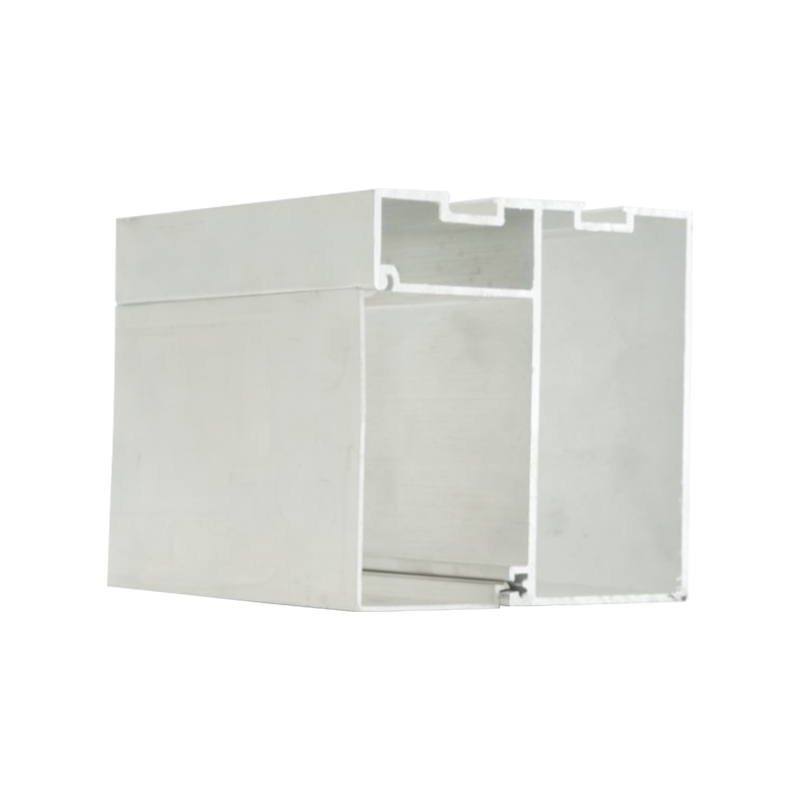
Where security and air infiltration are critical, sleeve-type aluminum profile and interlocking door stiles provide a labyrinth seal. The sleeve design involves an outer hollow chamber that receives a smaller inner extrusion, creating a thermal break and a physical barrier against dust. Interlocking stiles employ a hook-and-recess geometry: under wind load or pressure differential, the hook rotates into the recess, self-locking the door leaves without additional hardware.
2. Sliding Door System Engineering: From Track to Leaf
An integrated sliding door system requires four interdependent sub-components: overhead track profiles, roller carriages, leaf extrusions, and bottom guides. Failure in any single element leads to binding, excessive wear, or derailment.
2.1 Overhead Track Profiles & Heavy-Duty Guide Rails
Overhead track profiles are typically designed as a closed hollow section with an inverted T-slot or C-channel. The geometry distributes the load from the trolley wheels across two contact flanges, reducing point loading. For high-cycle applications (50,000+ cycles/year), heavy-duty guide rails incorporate a wear-resistant stainless steel insert co-extruded into the aluminum track. This bi-metal construction increases service life by 300% compared to bare aluminum-on-steel contact, as verified by linear wear testing under 200 kg point loads.
2.2 Automatic Sliding Door Extrusions
The rise of sensor-driven automated entrances has given birth to a specific class of automatic sliding door extrusions. These profiles include embedded raceways for synchronous belt drives and recessed channels for magnetic strip sensors. A key design feature is the asymmetric hollow chamber—larger on the drive side to accommodate the motor coupling, smaller on the trailing edge to maintain balance. Data from cycle testing shows that extrusions with integrated belt guides reduce lateral vibration amplitude by 0.7 mm compared to retrofitted belt attachments.
Comparative Performance: Standard vs. Specialized Extrusions
| Parameter | Standard C-Channel | Telescopic / Sleeve Profile |
|---|---|---|
| Max Door Weight (kg) | 120 | 280 |
| Air Infiltration (m³/h/m @ 50Pa) | 8.5 | ≤2.1 |
| Operational Cycles (w/o overhaul) | 25,000 | 75,000+ |
| Thermal Break Option | No | Integral polyamide |
3. Sliding Door Frame Detail: Precision in Joints and Tolerances
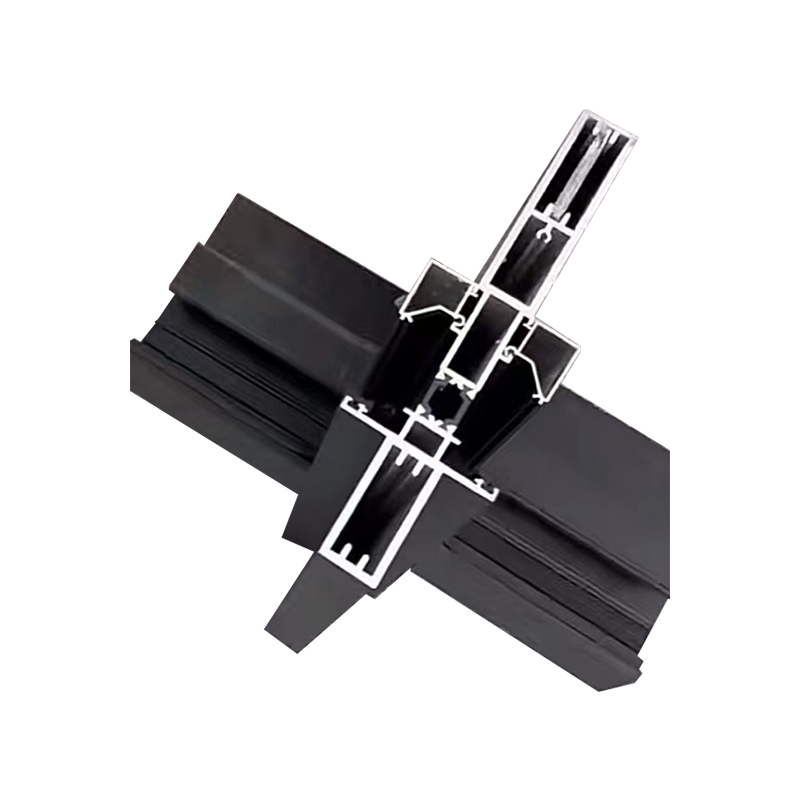
The sliding door frame detail is often the overlooked determinant of long-term reliability. Industrial frames differ from residential systems in three critical aspects: corner joint rigidity, sill transition geometry, and expansion accommodation.
3.1 Corner Joint Engineering
For heavy-duty sliding systems, mitered corners with internal stainless steel brackets outperform basic screw-port joints by a factor of 2.5 in torsional rigidity. The frame extrusion includes a dedicated 10mm x 3mm pocket for a hidden corner bracket, allowing pre-tensioning of the joint. When correctly torqued (15-18 Nm for M8 fasteners), the frame maintains squareness within 0.5 mm per meter even after 100,000 operating cycles.
3.2 Sill and Guide Integration
Bottom guides for sliding door systems must resist debris accumulation while providing lateral constraint. The optimal sliding door frame detail uses a recessed guide channel that sits 3-5 mm below the floor level, with a removable aluminum cover plate. This design allows cleaning access while maintaining a low 12 mm step height for cart or pallet traffic. Industrial field reports indicate that recessed guide channels reduce guide block wear by 60% compared to surface-mounted tracks in manufacturing environments.
- Anti-Lift Geometry: Overhead guide extrusions with a 15-degree undercut lip prevent leaf dislodgement under negative wind pressure.
- Compressible Weather Seals: Dual durometer EPDM seals (60 shore A base, 30 shore A lip) fitted into the sleeve cavity achieve Class 4 air permeability per EN 12207.
- Expansion Gaps: Frame extrusions longer than 4 meters incorporate a hidden expansion splice with 8 mm travel capacity to accommodate thermal movement.
4. Selection Matrix for Industrial Applications
Choosing the correct extrusion type requires mapping application demands to profile capabilities. The following matrix guides engineers through the decision process based on cycle frequency, environment, and load.
Best for: Hangar doors, large warehouse partitions, cleanroom airlocks. Provides 1:3 telescoping ratio with 40% less headroom.
Best for: Cold storage (down to -30°C), pharmaceutical production, dust-intensive environments. Achieves air leakage ≤1.2 m³/h/m.
Best for: External sliding doors, hurricane-prone regions, high-traffic entryways. Withstands 2.5 kPa wind pressure without auxiliary latches.
Best for: Automated assembly lines, car wash systems, baggage handling doors. Rated for 1.5 million cycles at 800 kg/m load.
5. Material and Surface Performance Benchmarks
Extruded profiles for specialized door systems are not generic 6063 alloy. Industrial-grade applications demand 6061-T6 or 6005A-T6 alloys with minimum yield strength of 240 MPa. Surface treatment is equally critical:
- Anodizing (Class AA15): 15 micron thickness, suitable for indoor or moderate UV exposure. Hardness 350-400 HV.
- Polyester Powder Coating (80-100 microns): Required for coastal or chemical environments. Salt spray resistance exceeds 1,000 hours per ASTM B117.
- Fluorocarbon (PVDF) coating: For extreme UV and industrial pollution. Maintains color and gloss after 10 years of outdoor exposure.
Case Data: Corrosion Resistance in Aggressive Environments
A study comparing untreated 6063-T5, anodized, and powder-coated profiles in a fertilizer production facility (high ammonia and humidity) showed that after 18 months, untreated extrusions exhibited pitting corrosion at 0.3 mm depth. Anodized profiles showed minor surface etching (0.05 mm), while powder-coated profiles had no measurable material loss. For automatic sliding door extrusions operating near wash-down stations, PVDF coating is recommended to prevent galvanic corrosion from dissimilar fasteners.
6. Installation and Maintenance Protocols
Even the most advanced extruded aluminum profile will underperform without correct installation and periodic service. The following checklist represents industry best practices for sliding door systems:
Installation: Critical Tolerance Checklist
- Header track straightness: max deviation 1.5 mm over 6 m length (laser alignment).
- Vertical plumb of side frames: within 2 mm per 3 m height.
- Roller eccentric adjustment: preload to 75% of maximum recommended deflection.
- Interlocking stile engagement: 5-7 mm overlap at center meeting stiles.
Maintenance Schedule (High Cycle Applications)
- Monthly: Clean track debris; inspect roller flanges for flat spots.
- Quarterly: Check all M6/M8 fasteners for torque retention; lubricate nylon guides with dry silicone spray.
- Annually: Measure guide rail wear (replace if wear exceeds 0.8 mm depth); inspect sleeve joint sealing strips.
7. FAQ: Engineering Extruded Profiles for Sliding & Telescopic Doors
Q1: What is the maximum unsupported span for a telescopic door aluminum profile track?
A1: For a standard heavy-duty track profile (80mm width x 60mm height), the maximum unsupported span between hanger brackets is 2.4 meters when supporting a door weight of up to 400 kg. For longer spans, intermediate support brackets or reinforced double-web profiles must be specified. Engineering guidelines suggest deflection ≤ L/500 under full load to prevent roller binding.
Q2: How do sleeve-type aluminum profiles achieve thermal breaks without compromising strength?
A2: Sleeve-type profiles use a "polyamide strut" system: two separate aluminum chambers are joined by glass-reinforced polyamide strips (25-35% glass fiber). This construction reduces thermal conductivity from 210 W/mK (aluminum) to approximately 0.25 W/mK at the break point. The mechanical interlock retains a bending strength of 180 N/mm², sufficient for most industrial door applications down to -20°C.
Q3: Can I retrofit a standard sliding door system with heavy-duty guide rails?
A3: Retrofitting is feasible only if the existing track extrusion has a compatible mounting interface (typically a 20mm T-slot or a flat 40mm landing). The new heavy-duty rails require deeper wheel engagement (12mm vs 8mm) and often a wider track width. Manufacturers advise replacing the entire overhead track assembly to ensure correct roller geometry and load distribution. Partial retrofits have shown a 70% increase in lateral vibration at speeds above 0.5 m/s.
Q4: What is the typical lead time for custom multi-track telescopic profiles?
A4: For custom extrusions (unique cross-section dies), tooling fabrication requires 4-6 weeks. Sample extrusion runs (3-5 meter lengths) can be completed within 2 weeks after die approval. Mass production (500+ kg orders) typically ships 4-6 weeks from sample approval. Standard telescopic door aluminum profile dies are widely available and can ship within 10-14 days.
Q5: How do I calculate the required wall thickness for a sliding door stile?
A5: The minimum wall thickness (t) can be estimated using: t = (P * W) / (2 * σ_allow * L) where P is wind pressure (Pa), W is door width (m), σ_allow is allowable stress (typically 110 MPa for 6063-T6 at safety factor 2), and L is stile length (m). For standard 3m x 2.5m doors in 1.5 kPa wind zone, minimum wall thickness is 2.2 mm. Most industrial profiles use 2.5-3.0 mm to incorporate mounting slots.
Q6: Are automatic sliding door extrusions compatible with pneumatic operators?
A6: Yes, but the extrusion must include a dedicated pneumatic cylinder channel—typically a 30mm x 20mm closed cavity with access slots for clevis mounts. Standard automatic sliding door extrusions designed for electric operators lack the necessary internal reinforcement for pneumatic thrust forces (which can exceed 1,500 N at 6 bar). Request a 'pneumatic-ready' profile variant with reinforced internal ribs and mounting provisions.