ENG
ENG
 English
 русский
 中文简体
中文简体 Español
 Indonesia
1. Introduction
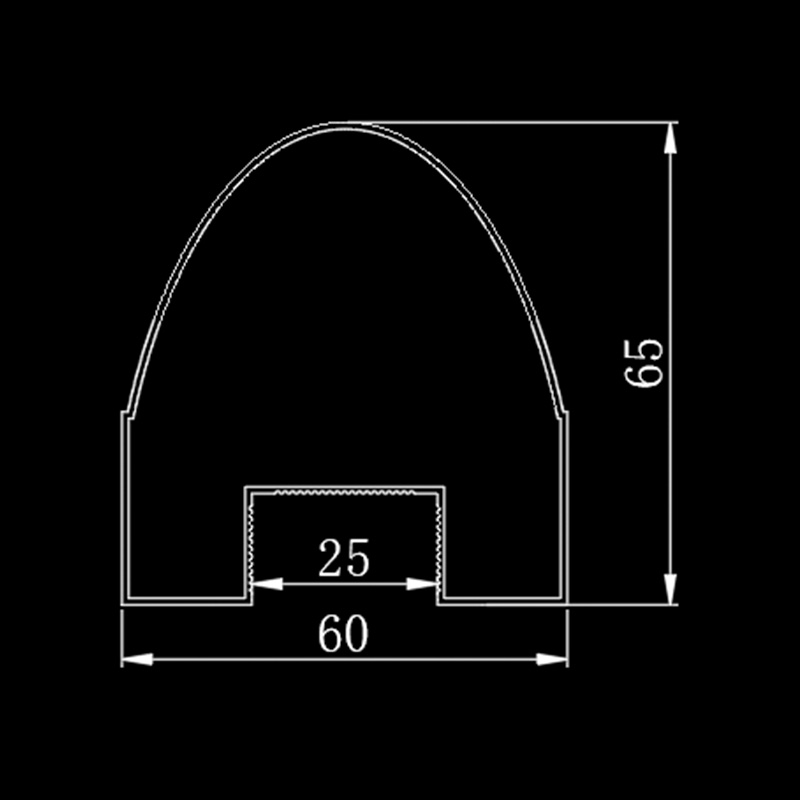
In contemporary architectural and industrial assemblies, shutter systems frequently integrate with façades, structural openings, and protective enclosures. The built‑in shutter aluminum profile serves as the backbone of these systems, conveying loads, enabling movement, and interfacing with adjacent materials such as glass, steel frames, and seals.
Selecting an appropriate aluminum alloy for high‑load shutter profiles is a multidimensional exercise that balances mechanical performance, fabrication capability, environmental durability, and life‑cycle requirements.
2. Engineering Requirements for High‑Load Shutter Profiles
2.1 Load Types and Structural Context
A high‑load shutter assembly may be subject to:
- Static loads arising from shutter weight, seals, and mounted hardware.
- Dynamic loads from wind pressure, operational actuation, and impact events.
- Thermal loads due to temperature gradients across the profile.
- Fatigue loading from repeated cycles of opening and closing.
Load demands vary with installation context — residential overhead shutters differ from commercial storefront systems. However, in both cases, the built‑in shutter aluminum profile must sustain mechanical integrity over a long service life.
2.2 Performance Criteria
Key performance criteria for aluminum alloys in high‑load shutter profiles include:
- Yield strength, dictating resistance to permanent deformation.
- Tensile strength, influencing the ability to bear peak loads.
- Modulus of elasticity, affecting stiffness and deflection under load.
- Fracture toughness, relevant for impact resistance.
- Corrosion resistance, critical for outdoor exposure.
- Fabrication compatibility, including extrusion quality, heat treatment response, and surface finishing.
3. Aluminum Alloy Families for High‑Load Applications
Aluminum alloys used for structural members are broadly grouped by series numbers, each with distinct characteristics:
| Series | Primary Alloying Element(s) | General Characteristics |
|---|---|---|
| 1xxx | Pure aluminum (≥99%) | High conductivity, low strength |
| 2xxx | Copper | High strength, limited corrosion resistance |
| 3xxx | Manganese | Moderate strength, good corrosion resistance |
| 5xxx | Magnesium | Good strength, excellent corrosion resistance |
| 6xxx | Magnesium + Silicon | Balanced strength, good extrusion characteristics |
| 7xxx | Zinc | Very high strength, careful processing required |
For built‑in shutter aluminum profiles, the 5xxx and 6xxx series are most relevant due to their balance of strength, corrosion resistance, and fabrication behavior.
4. Key Aluminum Alloys for Shutter Profiles
4.1 6060/6063 Series
Composition and Properties
The 6060 and 6063 alloys are magnesium–silicon alloys widely used in architectural extrusions. Their controlled chemistry yields consistent extrusion flow and surface quality.
Mechanical Characteristics
| Property | Typical Range |
|---|---|
| Tensile strength | 180–230 MPa |
| Yield strength | 100–170 MPa |
| Elongation | 10–15% |
| Modulus of elasticity | ~69 GPa |
Advantages
- Excellent surface finish after anodizing or painting.
- Good corrosion resistance.
- Predictable extrusion behavior.
Limitations
- Moderate load capacity relative to higher‑strength alloys.
- Reduced performance in applications with elevated static loads.
Application Commentary
6060/6063 alloys are suitable for shutter profiles where moderate structural demands are present and aesthetics or surface treatment consistency are priorities.
4.2 6005A Series
Composition and Properties
The 6005A alloy contains higher magnesium than 6063, providing enhanced strength with reasonable extrusion quality.
Mechanical Characteristics
| Property | Typical Range |
|---|---|
| Tensile strength | 260–290 MPa |
| Yield strength | 240–260 MPa |
| Elongation | 8–12% |
| Modulus of elasticity | ~69 GPa |
Advantages
- Increased strength over 6060/6063.
- Adequate corrosion resistance for outdoor environments.
Limitations
- Slightly reduced surface finish quality due to alloying.
- Requires careful control of heat treatment.
Application Commentary
6005A is often chosen for load‑bearing shutter profiles where the higher strength can reduce section thickness while maintaining structural performance.
4.3 6061 Series
Composition and Properties
6061 alloy is another magnesium–silicon system, but with the addition of copper, yielding an alloy with broader property distribution.
Mechanical Characteristics
| Property | Typical Range |
|---|---|
| Tensile strength | 290–310 MPa |
| Yield strength | 240–275 MPa |
| Elongation | 8–12% |
| Modulus of elasticity | ~69 GPa |
Advantages
- Well‑understood mechanical behavior.
- Good weldability and thermal treatment response.
- Reliable corrosion resistance.
Limitations
- Harder to extrude into very thin or complex profiles.
- Surface finish may require additional processing.
Application Commentary
6061 is a versatile choice for profiles experiencing combined static and dynamic loads, especially where welding or assembly with other aluminum components is involved.
4.4 5xxx Series (e.g., 5005, 5083)
Composition and Properties
Magnesium‑rich alloys in the 5xxx series provide enhanced strength and excellent corrosion resistance, especially in marine or coastal environments.
Mechanical Characteristics
| Alloy | Tensile Strength | Yield Strength | Elongation |
|---|---|---|---|
| 5005 | 160–200 MPa | 110–150 MPa | 12–18% |
| 5083 | 300–350 MPa | 240–280 MPa | 12–16% |
Advantages
- Superior corrosion resistance in chloride‑rich environments.
- Good fatigue performance.
- Suitable for thicker, high‑load sections.
Limitations
- Surface anodizing results may vary.
- Higher raw material cost relative to 6xxx alloys.
Application Commentary
5xxx series alloys are beneficial in installations oriented toward durability in aggressive environments or where fatigue life under repeated movement is critical.
5. Fabrication and Processing Considerations
5.1 Extrusion Behavior
The extrusion process dictates profile dimensions, tolerances, and surface quality. Alloys with good hot‑workability produce profiles with fewer internal defects and tighter dimensional control. For example:
- 6000 series alloys generally offer excellent extrusion flow.
- 5000 series alloys may require more careful extrusion parameters due to higher strength.
Die design and extrusion speed must align with alloy behavior to reduce internal stresses and surface cracking.
5.2 Heat Treatment and Strength Optimization
Heat treatment (e.g., T5, T6 tempering) enhances mechanical properties:
- T5 temper: Artificial aging after cooling from extrusion improves strength.
- T6 temper: Solution heat treatment and aging yield higher strength.
The choice affects load capability, residual stress distribution, and dimensional stability. For built‑in shutter aluminum profile systems, temper selection must balance strength with distortion control.
5.3 Surface Finishes and Corrosion Protection
Surface finishing is integral to performance:
| Finish Type | Protective Attributes | Aesthetic Outcome |
|---|---|---|
| Anodizing | Oxide layer resistance | Matte to glossy |
| Powder coating | Barrier protection | Diverse colors |
| Mechanical polish | Smooth surface | Reflective sheen |
High‑load shutter profiles exposed to weather require finishes that protect against oxidation, moisture ingress, and localized corrosion.
6. Environmental and Life‑Cycle Factors
6.1 Corrosion Mechanisms
Aluminum naturally forms a protective oxide layer. However, certain environments accelerate corrosion:
- Marine environments: Chloride ions accelerate pitting.
- Industrial atmospheres: Sulfur compounds may initiate surface attack.
- Temperature cycling: Expansion/contraction stresses coatings.
Alloy selection should consider localized exposure conditions. For example, 5083 shows improved resistance to chloride‑induced corrosion compared to 6063.
6.2 Temperature Effects
Elevated temperatures reduce yield strength and may influence creep behavior. A profile used in high‑temperature zones (e.g., near process equipment) requires alloys with minimal strength degradation at operating temperatures.
6.3 Fatigue Life
Shutter systems with frequent cycling impose fatigue stresses. Alloys with good fatigue endurance — particularly in 6xxx and select 5xxx series — support longer operational life.
7. Design Integration and Structural Optimization
7.1 Section Modulus and Profile Geometry
Profile cross‑section shapes determine bending resistance. A high section modulus reduces deflection under load without excessive material use. Alloy strength and profile geometry work in tandem:
- Higher‑strength alloys can allow reduced cross‑section areas.
- Complex geometries may improve stiffness and attachability.
Designers must collaborate with extrusion specialists to ensure formability and structural adequacy.
7.2 Interface With Fasteners and Hardware
Connection points introduce stress concentrations. Alloys with moderate ductility accommodate drilling, tapping, and fastening without cracking. Harder, higher‑strength alloys require precise tooling and controlled installation practices.
7.3 Integration With Adjacent Materials
The thermal expansion coefficients of aluminum differ from those of materials like steel or PVC. Expansion joints and allowances within the profile design minimize stress transfer between dissimilar materials.
8. Comparative Evaluation of Alloy Candidates
A consolidated comparison of alloy candidates helps align technical requirements with material capabilities:
| Alloy Series | Strength | Corrosion Resistance | Fabrication Ease | Surface Finish Quality | Application Suitability |
|---|---|---|---|---|---|
| 6060/6063 | Moderate | Good | Excellent | Excellent | Standard load profiles |
| 6005A | Moderate‑High | Good | Good | Good | High‑load moderate geometry |
| 6061 | High | Good | Moderate | Moderate | Mixed static/dynamic loads |
| 5005 | Low‑Moderate | Excellent | Moderate | Variable | Corrosion‑focused profiles |
| 5083 | High | Excellent | Challenging | Variable | Harsh environment profiles |
This table supports a systems perspective that links material properties with the operational demands of built‑in shutter aluminum profile installations.
9. Best Practices for Material Selection
A systematic approach to alloy selection includes:
- Define load conditions (static, dynamic, impact, fatigue cycles).
- Assess environmental exposure (moisture, chlorides, temperature gradients).
- Identify fabrication constraints (extrusion capabilities, tolerances).
- Evaluate finishing requirements (anodize vs. coating preferences).
- Validate long‑term performance through mechanical testing and case studies.
Cross‑functional collaboration — involving structural analysts, metallurgists, and manufacturing engineers — strengthens decision robustness.
10. Summary
Selecting an optimal aluminum alloy for built‑in shutter aluminum profile applications with high load demands requires a holistic evaluation of mechanical properties, corrosion resistance, fabrication behavior, and life‑cycle performance. Alloys in the 5xxx and 6xxx series represent practical options, each with trade‑offs that must be understood within the context of system requirements and environmental conditions.
The integration of profile design, processing strategy, and material characteristics underpins structural integrity and service life. By adopting a structured engineering assessment, stakeholders can align material choice with operational expectations and sustainability goals.
FAQ
Q1: Why not use pure aluminum for high‑load shutter profiles?
Pure aluminum lacks the mechanical strength required for structural support in high‑load shutter applications.
Q2: How does surface finishing affect profile performance?
Surface finishing provides environmental protection and can mitigate corrosion, enhancing service life without altering core mechanical properties.
Q3: Are welded connections feasible with all aluminum alloys?
Weldability varies; for example, 6061 alloys weld readily, while some higher‑strength 5xxx alloys require specialized procedures.
Q4: Can aluminum profiles handle coastal environments?
Yes, especially corrosion‑resistant alloys like 5083 combined with appropriate surface finishing.
Q5: Should thermal expansion be considered in profile design?
Absolutely — expansion allowances prevent stress buildup where aluminum interacts with other materials.
References
- Davis, J.R. Aluminum and Aluminum Alloys. ASM International.
- Hatch, J.E. Aluminum: Properties and Physical Metallurgy.
- Totten, G.E. Aluminum Alloys: Fabrication, Properties, and Selection.