ENG
ENG
 English
 русский
 中文简体
中文简体 Español
 Indonesia
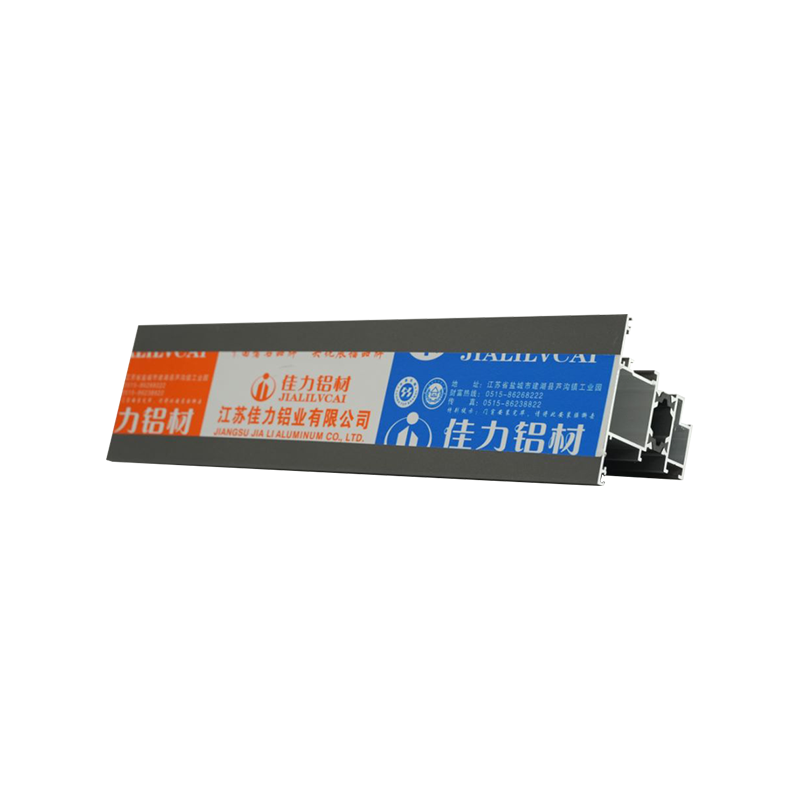
In contemporary architectural design, ultra‑slim framing systems have risen in prominence due to their ability to maximize glazing area, improve daylighting, and meet aesthetic aspirations for minimal visible structure. At the heart of these systems lies the window architectural aluminum profile, whose structural stability is critical to the overall durability and performance of the façade. Structural stability in ultra‑slim aluminum profiles is not a single attribute; it is the result of coordinated engineering across material selection, section design, connection detailing, fabrication quality, and systems integration.
1. Defining Structural Requirements for Ultra‑Slim Aluminum Profiles
In architectural practice, the structural requirements for an aluminum framing system are derived from multiple performance objectives:
- Withstanding design wind loads and imposed loads;
- Sustaining repeated cycles of thermal expansion and contraction without loss of integrity;
- Maintaining alignment under multidirectional stresses;
- Preventing excessive deflection that can affect glazing units or operational hardware;
- Ensuring long‑term dimensional stability under environmental exposure.
Unlike traditional heavy framing systems, ultra‑slim profiles challenge conventional structural design boundaries. The objective is to reduce visible aluminum while preserving robust capacity for load transfer, stability, and service durability.
1.1 Key Structural Performance Indicators
| Indicator | Definition | Why It Matters |
|---|---|---|
| Load Capacity | Ability to resist design wind pressures and other environmental loads | Prevents structural failure or excessive deflection |
| Deflection Control | Limiting movement under load | Ensures proper operation of glazing and hardware |
| Buckling Resistance | Ability to resist compressive instability | Maintains profile form and alignment |
| Fatigue Durability | Resistance to cyclic loading effects | Supports long service life without cracking |
| Thermal Stability | Dimensional integrity under temperature changes | Prevents seal failure and gap formation |
Each performance indicator reflects an aspect of structural stability, and their combined satisfaction is essential for design compliance and long‑term performance.
2. Material Attributes Affecting Profile Performance
The selection and treatment of aluminum alloys form the material basis for structural stability. Not all aluminum grades behave identically; specific mechanical and physical properties must be aligned with performance expectations.
2.1 Material Strength and Modulus of Elasticity
Aluminum alloys used in architectural profiles are chosen for their balance of strength, workability, and corrosion resistance. Higher strength alloys permit thinner wall sections while still achieving the required load capacity. However, aluminum has a relatively lower modulus of elasticity compared to steel, which means it deflects more under the same load. Ultra‑slim design must compensate for this through geometric design and integration with supporting elements.
2.2 Corrosion Resistance and Surface Protection
Surface coatings, such as anodizing or durable organic finishes, contribute to long‑term material integrity. Corrosion resistance is vital for maintaining cross‑sectional area and structural connection performance, especially in aggressive environments (e.g., coastal or industrial settings).
2.3 Thermal Expansion Behavior
Aluminum expands and contracts significantly with temperature changes. Profiles must be designed to accommodate these movements without compromising structural continuity or interface seals. This requires attention to joint design, gasket selection, and allowances for movement.
3. Geometric Design Principles for Stability
Geometry is among the most influential factors in yielding structural capacity. Ultra‑slim aluminum profiles rely on optimized cross‑section shapes and dimensions to achieve equilibrium between visual minimalism and structural robustness.
3.1 Section Modulus and Moment of Inertia
The resistance to bending (deflection control) and resistance to buckling are directly tied to the moment of inertia of the profile cross‑section. Geometry can be manipulated to increase stiffness without significantly increasing visible thickness.
Key geometric strategies include:
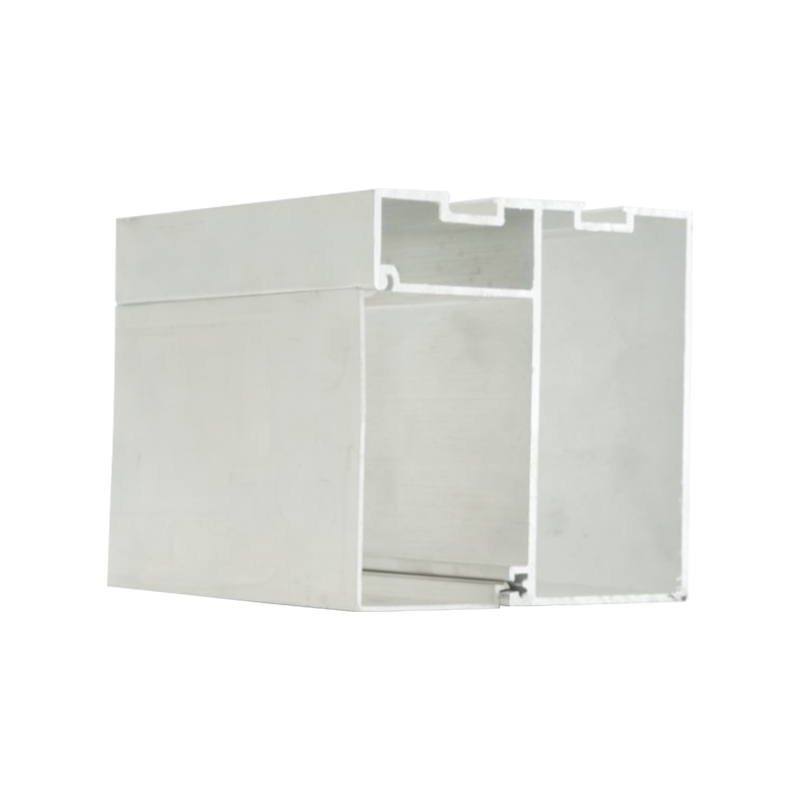
- Introducing internal ribs or chambers to increase section modulus;
- Using multiple walls and interconnected cavities for distributed stiffness;
- Designing profiles to work in concert with adjacent framing members for composite action.
3.2 Profile Symmetry and Load Path Continuity
Symmetrical sections improve the predictability of response under bidirectional loads. In ultra‑slim systems, symmetry also aids in simplifying connection detailing and reducing stress concentrations. Ensuring clear, continuous load paths through profiles and into supporting structures (e.g., mullions, transoms, anchors) reduces localized overstress and enhances uniform performance.
3.3 Integration of Thermal Breaks
Thermal breaks are non‑metallic separators that limit heat transfer across the profile. While primarily serving thermal performance, they also influence structural behavior. Integrating thermal breaks without compromising strength requires careful selection of materials with adequate shear strength and positive mechanical interlock.
4. Connection Systems and Anchorage Strategies
Proper connection design ensures that the structural capacity of the profiles is fully leveraged and that loads are properly transferred to the primary structure.
4.1 Fastener Selection and Placement
Fasteners must be selected based on expected loads and environmental exposure. Placement of fasteners should avoid creating points of weakness or stress concentrations. For ultra‑slim profiles, non‑splitting thread designs and pre‑drilled precision holes improve assembly accuracy and structural continuity.
4.2 Anchor Types and Structural Integration
Anchorage to the building structure can employ:
- Anchor bolts to concrete or steel sub‑framing;
- Embedded plates for façade systems;
- Adjustable cleats to accommodate tolerance variations.
Anchors must control movement in all necessary axes while accommodating thermal and moisture‑induced movements without transferring undue stress into the profiles.
4.3 Joint Details and Structural Continuity
Joints between profiles demand attention for load transfer as well as durability. Overlapping joint designs with mechanical interlocks improve load paths and prevent relative movement. Use of structural sealants and gaskets must balance seal performance with mechanical compatibility.
5. Fabrication Quality and Precision
Engineering design establishes the potential for performance, but fabrication quality realizes that potential. Precision in forming, cutting, and finishing significantly affects structural stability.
5.1 Tolerance Control
Tight dimensional tolerances ensure that components fit as intended without inducing assembly stresses. For ultra‑slim profiles, even minor deviations can magnify stress concentrations and compromise alignment.
5.2 Surface Preparation and Treatment
Consistent surface treatment ensures uniform corrosion resistance and mechanical performance. Inconsistent coatings, pits, or micro‑defects can act as initiation points for fatigue or stress corrosion.
5.3 Quality Inspection and Verification
Routine verification of critical dimensions, wall thicknesses, and straightness is essential. Non‑destructive evaluation (NDE) methods (e.g., ultrasonic thickness checks) may be employed in high‑demand applications.
6. Load Considerations and Structural Behavior
Understanding the various loads that ultra‑slim profiles encounter is essential to ensuring stability. Loads typically include wind loads, dead loads (e.g., glass weight), thermal stresses, and dynamic effects (e.g., seismic or vibration).
6.1 Wind Pressures and Deflection Limits
Wind loads impose both positive and negative pressures, and ultra‑slim profiles must remain within acceptable deflection limits to prevent glazing stress and seal failure. Standards mandate specific allowable deflection ratios based on span and loading conditions.
6.2 Dead Load and Gravity Effects
The weight of glass and accessories contributes to dead load. While gravitational forces are relatively constant, they can interact with other loads to generate combined stress states that affect stability.
6.3 Dynamic Loads
Vibration from mechanical systems or seismic events can induce cyclic stresses that contribute to fatigue over time. Profile design must consider dynamic amplification factors and appropriate damping mechanisms.
7. Environmental and Long‑Term Durability Factors
Structural stability is not static; it evolves over time under environmental exposure.
7.1 Corrosion and Surface Degradation
Environmental exposure to moisture, salts, pollutants, and temperature cycles can degrade surfaces. Structural stability is maintained through robust corrosion protection and periodic maintenance.
7.2 Thermal Cycling and Expansion
Thermal cycling can cause repeated expansion and contraction. Over time, this stresses connections and sealants. Designing for movement accommodation and using materials with compatible coefficients of thermal expansion reduces cumulative effects.
7.3 Moisture Infiltration and Freeze‑Thaw Effects
In cold climates, water infiltration followed by freezing can impose internal pressures on profiles and seals. Drainage provisions and moisture control details are essential for protecting structural integrity.
8. Performance Verification and Testing
Testing provides empirical assurance that ultra‑slim profiles meet the intended structural requirements.
8.1 Laboratory Testing Procedures
Laboratory tests simulate:
- Wind load deflection and cycle testing;
- Thermal cycling with humidity control;
- Long‑term load and creep tests;
- Impact or operational testing for movable elements.
Results guide design adjustments and validate assembly procedures.
8.2 Field Testing and Monitoring
In‑situ testing, including live deflection measurements and environmental monitoring, verifies performance under real conditions. Data from field tests inform maintenance practices and future design evolution.
9. Integration With Building Systems
Ultra‑slim profiles do not function in isolation; they are part of a larger façade and building system.
9.1 Interface With Structural Supports
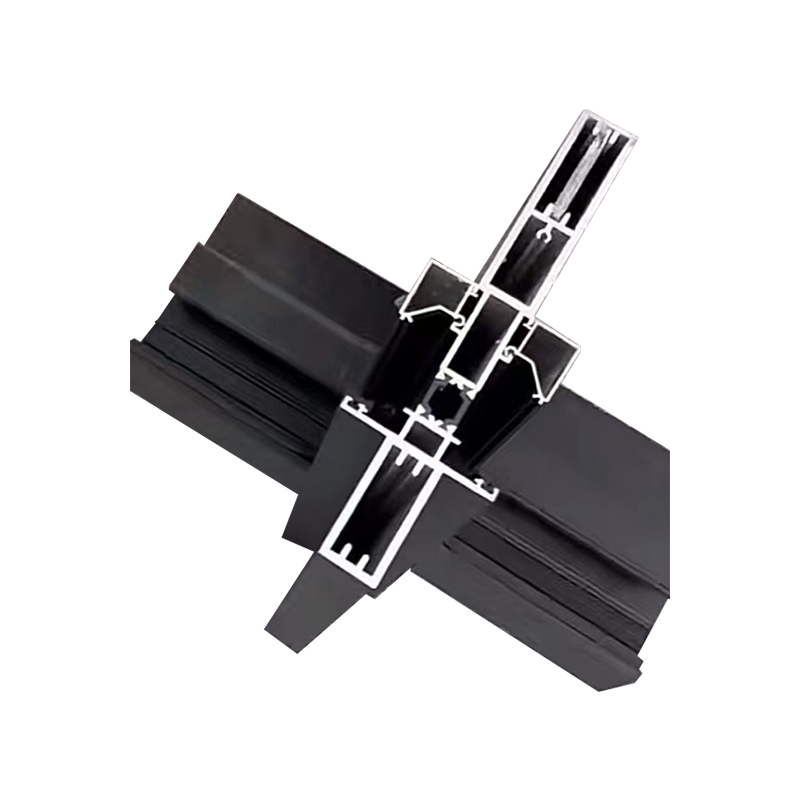
Profiles interface with mullions, transoms, and building structure. These interfaces must support load transfer while accommodating movement. Structural sealants and gaskets must complement mechanical connections.
9.2 Integration With Moisture and Vapor Barriers
Water and vapor control layers must align with profile interfaces to prevent moisture intrusion that can compromise structural and thermal performance.
9.3 Coordination With Mechanical and Electrical Systems
Sun shading, sensors, and operable components introduce additional considerations. Their integration must not compromise primary structural functions.
10. Design Optimization and Trade‑Offs
Achieving structural stability in ultra‑slim profiles involves balancing competing priorities:
| Design Parameter | Effect | Trade‑Off Considerations |
|---|---|---|
| Profile Wall Thickness | Increases stiffness | May reduce glazing area and increase weight |
| Section Complexity | Improves moment of inertia | Increases fabrication cost and complexity |
| Thermal Break Size | Improves energy performance | Potential reduction in structural continuity |
| Anchor Spacing | Improves load distribution | Affects installation time and tolerance requirements |
Design optimization requires systematic evaluation of loads, material properties, geometry, and fabrication constraints.
Summary
Structural stability in ultra‑slim aluminum profiles is achieved through a comprehensive, systems engineering approach that balances material properties, geometric design, fabrication quality, connection detailing, and environmental considerations. Success depends on integrating analytical design, empirical testing, fabrication precision, and thoughtful detailing to ensure that these slender frames perform reliably throughout their service life. As architectural demands evolve toward minimalism and transparency, engineering rigor in profile design remains indispensable for achieving both aesthetic and structural objectives.
Frequently Asked Questions (FAQ)
-
What defines an ultra‑slim aluminum profile?
It refers to framing sections that prioritize minimal visible width while meeting structural requirements. The design must balance slenderness with adequate load resistance. -
How are wind loads accounted for in design?
Calculations are based on local codes and standards. Profiles must be designed to remain within allowable deflection and stress limits under specified wind pressures. -
Why is thermal break design important?
Thermal breaks improve thermal performance but must also be designed to maintain mechanical continuity without compromising structural stability. -
What role does fabrication tolerance play?
Tight tolerances ensure accurate fits and avoid assembly stresses that could degrade structural performance over time. -
Can ultra‑slim profiles support heavy glazing?
Yes, with proper design of section geometry, anchorage, and integration with supporting systems, heavy glazing can be supported without undue deflection. -
How is long‑term performance verified?
Through laboratory testing simulating loads and environmental conditions, as well as field performance monitoring.
References
- Product design and material selection standards for architectural aluminum systems.
- Structural load design guidelines for façade systems in varied climate conditions.
- Best practices in connection detailing and structural anchorage for façade applications.
- Thermal and moisture control integration with architectural framing systems.